我年轻时的朋友 *Friend of My Youth*
二十多年前,我在寄宿学校读书,每天教室、宿舍、食堂三点一线,生活规律又简单。那个时候读《萌芽》,读新概念作文,幻城,樱桃之远,葵花走失在1890…看作者们笔下的敏感忧伤,我是一个远远的观望者。
二十多年后,我站在大学城图书馆的书架前,面对一排的艾丽丝·门罗,不知道从哪本看起。余光突然扫过“周嘉宁 译”——是年少时常在《萌芽》上见到的名字,后来读过几本她联创的《鲤》——冥冥之中跟这本《年轻时的朋友》有了跨越时空的联系,毫不犹豫地拿下。
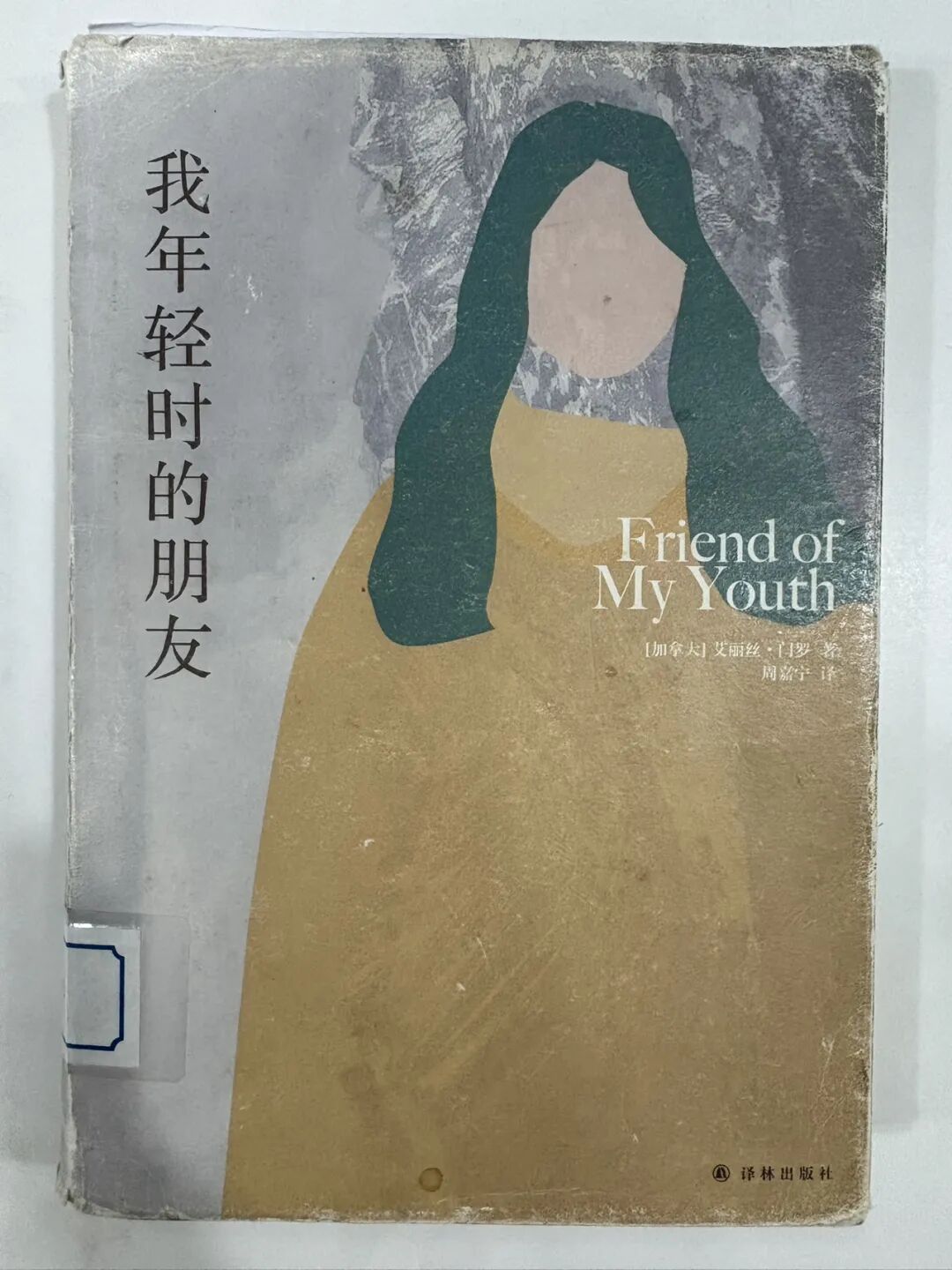
《我年轻的朋友》包含了十篇短篇小说,人物年龄跨度大,境遇多元复杂。我更愿意把它归类为“一部女性的群像”,描绘女性在各个阶段的困扰与挣扎,成长与蜕变。故事里当然是有男性角色的,但相比之下形象大多比较模糊,配角感十足。
还是熟悉的门罗的小说风格,几条故事线精妙地交织在一起,叙事手法更加丰富:嵌套、跳转、对比、隐喻,像一个复杂的高等数学函数,阅读过程惊喜不断,阅读难度相比之前的《公开的秘密》也更进一层。
其中的某些情节会让我想起自己年轻时的朋友。
比如《各不相同》中乔治亚和玛雅去市中心吃午饭的时候喜欢角色扮演。安吉拉和惠平也做过这样的事情。刚工作那会儿,她们租住在海淀南路附近。夜里去买水果就假装成海淀医院的小护士,刚刚上夜班回家。
她假扮成曾经和丈夫一起去过各种帝国前线的寡妇。她用清纯的嗓音和无精打采的服务生说话,问他们:“你们能不能好心⋯”接着告诉他们,他们真是非常非常体贴。
她和乔治亚一起编造帝国寡妇的故事,乔治亚也被编了进去,她是一个脾气乖戾的、神秘的雇佣同伴,社会主义者,名叫爱米•朱克斯小姐。寡妇名叫阿利格拉•福布斯-贝利太太…大部分在莫卧儿庭院度过的雨天下午,她们都在编造福布斯-贝利夫妇在威尔士一家潮湿的宾馆里度过的可怕蜜月。
《各不相同》
比如读到《假发时间》里的玛格特和安妮塔顶着风雪去上学。让我想起初中的时候一起上学的萍萍。我妈早上把粘粥(山东话版的玉米糊。插一嘴,这个玉米糊真是历史悠久的山东特色,余华老师在《山谷微风》里提到他六十年代末回山东探亲,天天喝玉米糊。看到那一段我就感觉血脉觉醒,倍感亲切。)熬好放在窗台上凉凉。萍萍来找我去上学,她有时候来得早,就在院子里等我把粘粥喝完。我们开始的时候走路去学校,后来开始上晚自习,赶时间就骑车去。考试结束之后,在回家的马路边铺开卷子对答案。
中午她们在镇子上散步,望着一间铺着漂亮地毯的商店的橱窗,里面只卖婚纱和晚礼服。安妮塔想在春天结婚,伴娘们穿着粉色和绿色的丝绸裙子,外面罩着白色的欧根纱。玛格特则想在秋天办婚礼,伴娘们穿杏黄色的天鹅绒。她们在伍尔沃斯超市看唇膏和耳环。她们冲进杂货店试用古龙水。但凡她们要为妈妈买必需品,有点钱,就会用找零买樱桃可乐或者棉花奶糖。她们从来不会特别不开心,因为她们相信肯定会有好事发生。她们会成为英雄;某种爱和力量正在等待她们。
《假发时间》
比如安妮塔和玛格特相隔三十多年再次相见,聊各自经历,那么不同,但“她们说了这么多。她们还没有打算结束。她们真的很开心。”在产假结束之前的最后一天,我见到来深圳出差的岩姐。二十多年前我们一起坐T73从济南到北京去上学,下了火车在德胜门转919去昌平邓庄。上学期间岩姐成绩优异转了专业,做北邮人站务,风生水起。毕业回到家乡移动,早早结婚生子,带团队,搬大房子。我这么多年一直兜兜转转,而且越兜越远。时隔多年再次见面,聊起工作,家庭,亲子关系,被挤压的稀烂的自我。感觉殊途同归,我们在各自的道路上经历着相似的成长,苍天饶过谁。
阅读门罗更多的还是距离感。我又回到年少时的观望者的姿态,远远的看作者笔下人物的抓马和人性的幽微。每一篇小说都值得单独拿出来写一写。但精力有限,仅将部分摘录如下。
门罗很擅长用简短几句话叙述出十几年甚至几十年的光景。
埃夫里尔坐飞机把芭格丝的尸体带回多伦多,在那里举办了葬礼,葬礼上的音乐很好听。飞机上她坐在一个同样从苏格兰回加拿大的年轻人身边——他来参加一场著名的业余高尔夫锦标赛,结果不尽如人意。失败和挫折让他俩彼此友善,而且他们轻易地被沉迷于对方对体育和音乐世界的无知。年轻人住在多伦多,于是自然出现在了葬礼上。
埃夫里尔很快和他结婚了。又过了不久,他们不再那么友善,也不再那么沉迷,埃夫里尔觉得她选择了这个丈夫主要是因为芭格丝会认这个选择很愚蠢。他们离婚了。
《善良与怜悯》
黑兹尔曾经和其他年轻妻子坐在一起聆听,既温顺又骄傲—至少她是如此——意乱情迷。她们的丈夫仪表堂堂,勇气十足。黑兹尔同情嫁给弱者的女人。
十年或者十五年以后,同样这群女人坐在一起听故事,她们板着脸,互相打量,要不干脆放空自己(有时候黑兹尔也会这么干)。讲故事的男人都已经老了,还会变得更老。
《抓住我,别让我走》
她已经厌倦了这次拜访,但是她得要说说自己的情况。没有,她没有结婚。是的,她在工作。她和同居的朋友一起经营一个农场和一个出版公司。处境尴尬,没有很多钱。有趣,是的,朋友是男的。
《各不相同》
她故事里也常常有被男人毁掉的女性和她们自救的力量。
她不介意别人知道自己在三十多岁的时候曾经精神崩溃。有差不多两个月的时间,她无法离开房间。大部分时候她待在床上。她用彩色笔涂儿童绘画书。她只能做这些来控制恐惧和散漫的悲伤。接着她控制住了。她订阅了大学招生简章。是什么让她振作了起来?她也不知道。她真的不知道。可能她就是厌倦了。可能她就是厌倦了崩溃。
她知道当她离开床的时候(她自己没这么说),留下了一部分的自我。她感觉那个部分和杰克有关,但她并不认为任何抛弃是永恒的。无论如何,只是无奈。
《抓住我,别让我走》
她不需要见他,多年来她都没有想过要见他。一个男人在一段不可控制的时间毁了你的生活,直到有一天什么都没有了,他曾经的所在之处只剩下空洞。这种事情解释不清。
“你知道此刻我的脑海中闪过了什么吗?”玛格特说,“商店曾经在早晨的模样。我们冻得半死。我们过得那么苦,自己还不知道。”我们有力量,安妮塔想。
当你充满恐惧和期待时,便拥有了转换的力量——你的生命中没有一样东西是不重大的。你从没想过会失去那种力量,是因为你根本不知道自己拥有。
《假发时间》
她对女性的美的描述别具一格。
她常年打理花园、徒步、速度滑雪,身上有肌肉。这些运动也让她的皮肤干燥起皱,从某个时候起,她不再担心这些,她扔掉了所有在逞强或者绝望的时候买的彩妆,笔和魔法油膏。她把头发扎在脑后,放任它们长成随便什么颜色。她撕开自己犹疑不决、代价昂贵的美貌外壳:脱身而出。
甚至在杰克去世前的几年,她就这样做了。这关乎于她如何把握自己的生活。她想过,也说过,到了一个时间,她必须把握自己的生活,她对别人也有同样的要求。她要求行动,练习,方向。
《抓住我,别让我走》
但是在此之前,在玛蒂尔达找到工作,或者剪短头发之前,琼已经感受到—那会儿她早就已经不爱她了——玛蒂尔达毋庸置疑的美貌。她知道这样的美貌会把你区分出来—至少在洛根是这样的——仿佛瘸子或者口吃。美貌孤立了你——甚至比轻微残疾更严重,因为它可以被视为是一种羞耻。琼意识到这一点以后,看到玛蒂尔达尽力摆脱或者掩饰自己的美貌,她有些失望,却并不吃惊。
《哦,有什么好处?》
她讲女性临出轨前的心理。
和莫里斯挥手告别时,她没有从他脸上看到丝毫怀疑。但是可能有点失望。他少了两天有人陪伴的日子,多了两天孤独。他不会承认这样的感觉。可能只是出于她的想象。她这样想象可能是因为她感觉自己也在和丈夫孩子挥别,在和所有认识的人挥别,除了那个她要去见的男人。一切都是那么轻易的、完美的欺骗。她当然也感觉内疚。她被他们的无辜打击。她知道生活中出现了无法修复的裂痕。这是真实的一切的悲伤和内疚都是真实的,而且它们绝不会消失。但是它们也无法阻挡她。她非常高兴,她感觉自己除了继续,别无选择。
《哦,有什么好处?》
她也讲女性发现自己被出轨之后的心理。
她喝了一点酒。脑子里不断闪出各种念头。律师,离婚。惩罚。这些念头像铜锣一样地敲她,然后又消逝,没有告诉她应该如何继续。她应该先怎么做,再怎么做,她的生活如何继续?孩子们都有这样或者那样的事情,男孩们夏天要工作,黛比的耳朵得要做个小手术。她不能带他们走,不然她将不得不在所有人的闲言碎语中独自扛过去——她已经经历过一次了。而且下个周末她和鲁埃尔被邀请参加一个周年庆派对,她得准备礼物。还有一个男人要来修下水道。
《假发时间》
还有无处不在的讽刺和刻薄。
她观察到已婚妇女的一个特征,很多女人不得不捏造自己的丈夫。她们归纳外貌、观点和独断专行的做派。她们说,哦,是的,我丈夫很特别。他不碰萝卜。他不吃煎肉。(或者他只吃煎肉。)他喜欢我一直穿蓝色(褐色)。他受不了管风琴。他无法忍受女人不戴帽子出门。我抽烟的话他会杀了我。这样一来,复杂而间接的男人就被描述成了丈夫、一家之主。
《门斯特河》
埃夫里尔在甲板上走来走去,听别人交谈。她心想航海旅行原本是为了摆脱一切,“一切”指的是你的生活,你的生活方式,你的家人。而在她听到的交谈中,人们却做着相反的事情。他们都在谈论自己—他们的工作,孩子,花园,容厅。他们交换水果蛋糕和肥料的制作方法。如何对付女婿和投资。疾病,背叛和房产的传言。我说过。我做过,我一直相信。嗯,我不知道你怎么样,但是我…
《善良与怜悯》

AI-generated translation.
More than twenty years ago I was a boarding-school student. Each day was a three-point line — classroom, dorm, dining hall — life regular and simple. Back then I read Mengya magazine, the New-Concept Composition essays, City of Fantasy, Cherry, So Far Away, The Sunflower Lost in 1890… looking at the sensitivity and grief in those authors’ prose, I was a distant onlooker.
More than twenty years later, I stood in front of the bookshelves at the University Town Library, facing a row of Alice Munro, not sure where to begin. Out of the corner of my eye I caught “Translated by Zhou Jianing” — a name I had often seen in Mengya in my youth; later I had read several issues of the journal Carp she co-edited. As if by some cross-time connection, this Friend of My Youth now linked us. I picked it up without hesitation.
Friend of My Youth is a collection of ten short stories. The characters range widely in age, and their situations are diverse and complicated. I would rather classify it as “a group portrait of women” — depicting women’s troubles and struggles, growth and transformation, in every stage of life. There are male characters, of course, but their figures are mostly hazy by comparison, very much supporting roles.
It’s still the Munro style I know: several story-lines woven together with great precision; richer narrative technique — nesting, time-jumps, contrasts, metaphors — like a complex higher-mathematics function. Reading it brings one surprise after another, and the difficulty has gone up another notch from Open Secrets.
Some passages remind me of friends from my own youth.
In “Differently,” for instance, Georgia and Maya play “role-play” when they go downtown for lunch. Angela and Huiping used to do that too. When they first started working they lived in a rental near Haidian South Road. At night, going to buy fruit, they pretended to be little nurses from Haidian Hospital just off the night shift.
She pretended to be a widow whose late husband had been with her on various imperial frontiers. In a virginal voice she’d talk to the listless waiters, asking them “Would you be so kind as to…” and then telling them they were very, very thoughtful.
She and Georgia made up a story of an imperial widow; Georgia was written in too, as a moody, mysterious paid companion, a socialist, called Miss Amy Jukes. The widow was Mrs. Allegra Forbes-Bayley… Most of those rainy afternoons in the Mughal Courtyard, they were inventing the dreadful Welsh honeymoon of the Forbes-Bayleys at a damp guesthouse.
“Differently”
Reading “Wigtime,” about Margot and Anita going to school through a snowstorm, reminded me of Pingping, my middle-school walking-to-school friend. My mum would cook niànzhōu in the morning (the Shandong version of corn porridge — a brief aside: this corn porridge is, in fact, a long-standing Shandong specialty. In Mountain Valley Breeze, Yu Hua mentions returning to Shandong to visit family in the late 1960s and drinking corn porridge every day. Reading that scene I felt my blood awaken, and an unexpected familiarity). She’d cool the porridge on the windowsill. Pingping would come for me. Sometimes she’d come early and wait in the yard while I finished the porridge. At first we walked to school; later when we had evening self-study sessions we cycled to save time. After exams, on the side of the road home, we’d spread out the test papers and check answers.
At noon they walked downtown, looking at the windows of a shop with beautiful carpet inside, where only wedding dresses and evening gowns were sold. Anita wanted to be married in spring, with bridesmaids in pink and green silk dresses with white organza over them. Margot wanted to be married in autumn, with bridesmaids in apricot velvet. They looked at lipsticks and earrings at Woolworth’s. They burst into the drugstore to try perfumes. Whenever they had to buy something for their mothers and had a little extra money, they’d use the change for cherry cola or cotton candy. They were never particularly unhappy because they believed something good was bound to happen. They were going to be heroes; some kind of love and power was waiting for them.
“Wigtime”
When Anita and Margot meet again after thirty-plus years and talk about their lives — so different from one another — “they had so much to say. They had no intention of stopping. They were genuinely glad.” On the last day before my maternity leave ended, I met Yan, who came to Shenzhen on a business trip. Twenty-some years ago we’d taken Train T73 from Jinan to Beijing for university together, and switched at Deshengmen Gate to the 919 to Dengzhuang, Changping. Yan was an outstanding student, transferred majors, ran the Beijing University of Posts and Telecommunications website operations brilliantly. After graduation she went home to work at China Mobile, married early, had kids, led a team, moved into a big home. I, on the other hand, kept wandering — and the wandering kept taking me further away. Years later, meeting again, we talked work, family, parent-child relationships, the squashed-flat selves. It felt like different paths arriving at the same place — both of us going through similar growth on our separate roads. No one is spared.
Reading Munro is mostly an experience of distance. I’m pulled back into my younger self’s onlooker posture, watching from afar the drama and the subtleties of human nature she paints. Every story deserves its own essay. With limited bandwidth, I’ll just excerpt a few passages here.
Munro is wonderfully good at narrating ten or twenty years’ worth of life in a few sentences.
Averil flew Bugs’s body back to Toronto, where a funeral was held, with very nice music. On the plane she was seated beside a young man also flying from Scotland to Canada — he was there to participate in a famous amateur golf tournament, and the result hadn’t gone well. Failure and frustration made them kind to one another, and they were easily transfixed by each other’s ignorance of the worlds of sport and music. The young man lived in Toronto, so he naturally appeared at the funeral.
Averil married him soon after. Not long after that, they were no longer so kind, no longer so transfixed; Averil thought she’d chosen this husband mainly because Bugs would have thought the choice silly. They divorced.
“Goodness and Mercy”
Hazel had once sat with the other young wives listening, both meek and proud — at least she had been — completely smitten. Their husbands had been good-looking, brave. Hazel pitied the women who had married weak men.
Ten or fifteen years later, the same group of women sat listening to those stories with stony faces, sizing one another up, or simply going blank (sometimes Hazel did this too). The men telling the stories were already old, and would only get older.
“Hold Me Fast, Don’t Let Me Pass”
She was tired of the visit, but she had to tell her story. No, she wasn’t married. Yes, she worked. She ran a farm and a publishing company with the friend she lived with. Things were awkward; not much money. Interesting, yes; the friend is a man.
“Differently”
Her stories also often feature women ruined by men, and their power to save themselves.
She didn’t mind anyone knowing that, in her thirties, she had once had a breakdown. For nearly two months she couldn’t leave the room. Most of the time she stayed in bed. She filled in children’s colouring books with colour pens. That was the only thing she could do to control the fear and the diffuse grief. Then she got it under control. She subscribed to university calendars. What lifted her? She didn’t know. She really didn’t. Maybe she was just tired. Maybe she was tired of breaking down.
She knew that when she left the bed (she didn’t say so), she’d left a piece of herself behind. She felt that piece had to do with Jack, but she didn’t think any abandonment was permanent. In any case, it was simply what it was.
“Hold Me Fast, Don’t Let Me Pass”
She didn’t need to see him; for years she had not thought of seeing him. A man ruins your life for some uncontrollable period, until one day there is nothing, only an emptiness where he used to be. These things can’t be explained.
“Do you know what just flashed through my head?” Margot said. “What the shop looked like in the morning. We were freezing half to death. We had it that hard, and we didn’t even know.”
We had power, Anita thought. When you are full of fear and expectation, you have the power of transformation — there’s nothing in your life that isn’t huge. You never imagined losing that power, because you didn’t even know you had it.
“Wigtime”
Her descriptions of women’s beauty are distinctive.
She had spent years gardening, hiking, speed-skating; she had muscle on her. These sports also made her skin dry and creased; from some point on, she stopped worrying about that. She threw out all the makeup she’d bought in stubbornness or despair, the pencils, the magic ointments. She tied her hair back, and let it grow into whatever colour it would. She tore open the doubting, expensive shell of her beauty: she stepped out of it.
Even in the years before Jack died, she had been doing this. It had to do with how she held her own life. She had thought, and said, that at a certain time she had to hold her own life, and she demanded the same of others. She demanded action, practice, direction.
“Hold Me Fast, Don’t Let Me Pass”
But before that, before Matilda found work or cut her hair short, June had already felt — by then she had long since stopped loving her — Matilda’s unquestionable beauty. She knew that kind of beauty set you apart — at least in Logan it did — as much as being lame or stuttering. Beauty isolated you; it was worse than a mild disability, because it could be read as a kind of shame. When June realised this, watching Matilda do her best to slough off or hide her beauty, she was a little disappointed but not surprised.
“Oh, What Avails?”
She catches a woman’s mind on the brink of an affair.
She waved goodbye to Maurice without seeing the slightest doubt on his face. But perhaps there was a little disappointment. He had two fewer days of company, and two more days of loneliness. He wouldn’t acknowledge that feeling. Maybe it was only her own imagining. She imagined this maybe because she felt she too was waving goodbye to husband and children, to everyone she knew, except for the man she was going to meet. Everything was so easy, so perfect — the deception. Of course she felt guilty too. She was struck by their innocence. She knew an irreparable fissure had appeared in her life. All this was real; all the sadness and the guilt was real; and they would never disappear. But they could not stop her either. She was very happy. She felt she had no choice but to go on.
“Oh, What Avails?”
She also catches a woman’s mind on discovering she’s been cheated on.
She drank a little wine. Various thoughts flashed through her head. Lawyer. Divorce. Punishment. These thoughts beat against her like brass gongs and then died away, telling her nothing about how to continue. What was she to do first, then second; how would her life go on? The children had this and that going on — the boys had summer work, Debbie needed a minor ear operation. She couldn’t take them away, or she’d have to bear all the gossip alone — she’d been through that before. And the next weekend she and Reuel were invited to an anniversary party; she had to get gifts. And a man was coming to fix the drains.
“Wigtime”
There is also her omnipresent irony and sharpness.
She noticed something about married women: many of them had to invent their husbands. They generalised about appearance, opinions, autocratic ways. They’d say, oh, yes, my husband is very particular. He won’t touch turnips. He won’t eat fried meat (or, he’ll only eat fried meat). He likes me always in blue (in brown). He can’t bear organ music. He can’t stand a woman going out without a hat. He’d kill me if I smoked. And so, the complex, indirect man was described, declared a husband, head of household.
“Meneseteung”
Averil walked back and forth on the deck, listening to other people’s conversations. She thought a sea voyage was meant to escape everything — “everything” being your life, your way of life, your family. But in the conversations she heard, people were doing the opposite. They were all talking about themselves — their jobs, their children, their gardens, their living rooms. They exchanged fruitcake and fertiliser recipes. How to handle a son-in-law and investments. Rumours of disease, betrayal, real-estate. “I said. I did. I always believed. Well, I don’t know about you, but I…”
“Goodness and Mercy”