书摘-魔鬼老大 天使老二 [Book Notes] First-Born Devil, Second-Born Angel
和一群妈妈聚会,话题自然离不开娃。
一一还没断奶,一一妈已经研究了半天学区房。对各区的入学政策学校情况如数家珍:比如某区学校虽好,但课堂内容不足课外补习成风,孩子太辛苦;比如某区入学名额虽然“全区派分”,但“权贵太多,好学校也轮不到咱”……且不说那动辄几十万一平的天价学区房。相比之下,国际学校普遍更加因材施教,孩子通常会更快乐。可是也有家长吐槽国际学校的活动太多,过于社交导向,担心孩子因此失去自我空间、深度思考和独处的能力……且不说那昂贵的学费和一旦踏上就难走的回头路。
讲来讲去就是无路可走了嘛!
“不可以有多少吃多少,富就富养,穷就穷养么?”我这一问,在场妈妈们全体一副“等你有了娃你就知道了”的表情说“父母总是想给孩子最好的!”
那么,最好的是啥呢?
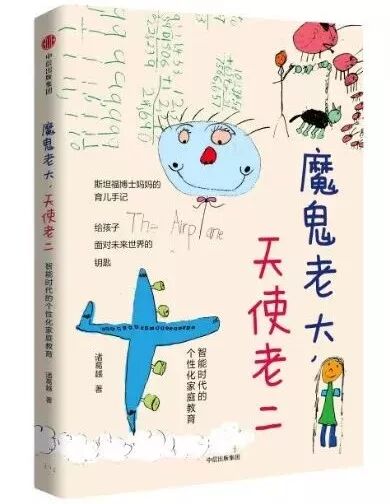
《魔鬼老大,天使老二》是一本“菁英”妈妈写的育儿书,分享了许多对教育的看法和心得,近日在朋友圈风靡,作者是IT高管,儿子眼中“美丽的老板”。薄薄一本很好读,或许因为穿插了许多写给孩子的日记和稚气的图画,倒更像是一本育儿成长回忆录,温馨细碎又有观点。即便还没有养育下一代,反观自己的成长,甚至和父母的沟通也深受启发。
每个人天生就是不一样的
性格是天生的,人和人是如此的不同。
书中老大小时候是一个沉浸在自己世界里的倔强的高需求宝宝,妈妈每天花大量精力“停止他手头正在做的事,转换状态”,和他斗争刷牙洗澡睡觉起床的事情。他不喜欢和其他孩子玩,不喜欢踢足球打篮球之类的集体运动,在幼儿园的前几个月一句话都不说,老师甚至怀疑他有语言障碍。老二则是个天生的“天使宝宝”,听话乖巧,调皮贴心,懂得别人的需求又会找得体的方法表达,“该迂回的迂回,该讨好的讨好”。“在幼儿园也是积极开朗,关心同学,深受欢迎”,上大班的时候就有七个小女孩儿追着他叫“老公”。
性格作为每个人与生俱来的特征属性,很难讲是好还是坏。
老大小时候“在人和感情方面相对迟钝,出乎意料的,反过来也会表现为优点,‘人与人之间的关系’在他那里是不怎么存在的。所以他没有骄傲、忌妒,不搞小圈子,不受世俗影响,谁跟他玩,他就跟谁玩。凡是因人性复杂而出现的那些缺点,他都没有;再加上专注带来的学业上的优秀,在外人看来的确像是个完美的孩子”。老二是个“对人情世故比较敏感的孩子,有着不同的需求和担心。他会不高兴,也会怕别人不高兴,总想表现得好一些让大家喜欢。这种顾虑有时候是好事,有时候却是一种约束。老二更容易受到环境的影响,电影电视、流行文化、周围人谈论的观点,他都会吸收,而老大对这一切视而不见、充耳不闻,家里或社会上流行什么都与他无关。”
更有趣的是天生思维习惯的不一样。
老大“喜欢看到事情的经过,一步步追溯原因,一定要搞清楚证明了才算数”;老二“好联想,喜比较,享受表演的快感,对真相没有那么大的兴趣”。同样是饭掉在地上,老大会说“饭掉在地上,一只蚂蚁看到有饭吃,就去叫一万只蚂蚁来,就有壹万零一只蚂蚁了!”老二会说“饭掉在地上就会被细菌吃掉了!用肥皂可以杀细菌,细菌觉得肥皂很辣。”对于老二,站在别人的角度看问题,体会细菌的感受是一件很自然的事情。而对于老大,这个比较难做到,做加法却很自然。
我和家聪也是类似,我向来不羁放纵爱自由“对人和感情相对迟钝”,而家聪就天生细腻敏感贴心许多。我从小到大不止一次地被提醒自己的什么做法让在场的其他人很尴尬,父母也跟着尴尬,但我自己一点儿都没有意识到!(具体情景现在也想不起来了-_-!)家聪则一直都是活宝人设,是各种关系之间的缓冲剂和润滑油。中学时候好朋友来家里住,早上起床我自己该干嘛干嘛,小暖男起床先跑去问“姐姐睡得好不好呀?”不过他小时候经常担心,考试成绩不好爸妈怎么办?我就一脸黑线,你自己考试好不好和爸妈有什么关系?
“我们不用把喜欢待在家里的孩子推出去,也不用把喜欢交往的孩子拉回来,让孩子找到自己舒适的空间是最重要的。”养娃好像是在做实验,观察探索尝试调整再观察,真有趣。
幸福的答案就是“享受做事的能力”
“如果我们静下心来思考一下对孩子的期望,我们就会发现,我们最希望的是他们能够幸福。所有的知识、成绩、名校、成功,都只是我们认为可以给他们带来幸福生活的一些手段。作为一个现代的父母,我们也都知道金钱买不了幸福、成功不一定幸福等大道理。我们可以教孩子有知足常乐的心态,但我们同样知道仅有心态还是不够的。那么,在我们给他们生活技能的同时,在社交和情感技能上应该教给他们什么,来帮助他们通往幸福之路呢?是否有一件事情,或者可以学习的某一项技能,能让孩子在一生中都更幸福呢?”
答案是有的,就是“享受做事的能力”。
“人最幸福的时间,是他在做一件事,因而忘我的时间”。
那天听诺言直播讲我们的教育一直以来都是“苦”的教育,诸如“学海无涯苦作舟”,“梅花香自苦寒来”,“吃得苦中苦,方为人上人”,“头悬梁锥刺股”等等,总是讲“苦尽甘来”,“今天的辛苦换来明天的幸福”之类。然而把“快乐”和“学习差”对等在逻辑上是讲不通的,人生每个阶段每时每刻都应该追求幸福。
作者在互联网科技行业,认识许多美国程序员,热爱编程,非常享受用完美的逻辑解决问题的过程。倒是国内许多自称“码农”的程序员,即便工作做得很好,也把目标定在有一天挣了多少钱就再也不做上了。“不做这件事干什么呢?其实很多人也没有想清楚,他有的只是‘不喜欢’。把‘过清闲日子‘当作人生目标的人,缺失的正是这种忘我的快乐”。
“智慧、才能和成就是可以与快乐同在的”,要相信真的有人是“学习使他快乐的”,也真的有人是“热爱所做的事业”的。我组一开发极其享受用“代码逻辑解决问题的过程”,某天临时请假,后来聊起来居然是前一天在家写绝地求生的外挂写嗨了一抬头天都亮了。“我就是喜欢写代码,写代码还有工资拿,这好爽!”
每个小孩子天性里面都是有这样的做事的兴趣的,应试教育的很大的问题是经过十几年,孩子已经丧失了“喜欢做事”的能力。我们或许可以在孩子小的时候努力保留他们单纯的,没有目的性做事的兴趣。
教育是在生活之中的
“教育不是速食面、速成班,没有七个方法让你的孩子不打电玩,也没有十二张图让你的孩子拥有美德。真正的教育是在一点一滴的日常生活中,它是漫长的而不会是完成时的;它是人性的而不是功利的;它是生活的一部分,而不是生活之外的。”
有些事情身教比言传更有用。“礼节,素养,格局,这些与其叫做素质‘教育’,不如叫‘培养’或者‘影响’。它们既不是知识,也不是技能,它们表里如一。敏锐的孩子将忽略你说的一切,而模仿你的行为。教育孩子成长的过程,也是我们不断提升和完善自己的过程。你希望孩子成为什么样的人,就自己先做那样的人吧。”
而有些事情是长大了就会做的事情。“孩子们有大智慧,妈妈们不用杞人忧天。有时候观察跟孩子们一起玩耍的孩子和他们的父母,觉得有百分之七八十的父母的教诲是多余的。孩子的人生需要自己走,自己体验和领悟,大多数时候,父母只需睁一只眼闭一只眼,随他们去吧。”一切该发生的自然会发生。将近一个世纪前,纪伯伦在《先知》里就讲:孩子借助你来到这个世界却并不属于你,你是那无比稳定的弓,而他是那一路飞翔的箭。现在读来依然睿智。
自己有时候也会想怎样的决定是对娃好的,是出国发展还是留在国内,是继续折腾还是安稳窝着。有人说走过的路去过的地方做过的事情都会变成后天基因遗传下去。有人说在一个地方积累足够的经验可以给娃更好的指引。也在一些转折时刻和父母有过分歧和冲突。争执回旋之后到底还是自己做了决定。朋友们笑说大可不必为娃考虑那么多,因为到时候他们会自己做决定根本不会听你的!
妈妈聚会的话题兜兜转转还是回到“如何给宝宝断奶”上来,大家七嘴八舌分享自己的经验,向阳妈妈幽幽地说“我用了一次风油精之后,宝宝就再也不吃奶了”。叹为观止!人类智慧!赶紧拿小本本记下。我的理想是当妈妈,除了给自己的不羁放纵爱自由找个舒适的空间之外,我还为我的理想准备好了风油精。
AI-generated translation.
When a group of mothers gets together, the conversation inevitably drifts back to the kids.
Yiyi hasn’t even been weaned yet, and her mum has already spent ages researching school districts. She rattles off enrolment policies and school profiles district by district: this district’s schools are excellent, but the classroom material is so thin that extra tutoring is the norm, the kids work themselves to death; that district allocates places “across the whole district,” but “the rich and well-connected snap up everything, ordinary families never get the good schools”… not to mention the eye-watering price per square metre on the district housing. International schools, by comparison, mostly teach to the individual child, and kids tend to be happier. But other parents grumble about international schools too: too many activities, overly socially oriented, kids losing their personal space, depth of thought and capacity to be alone… not to mention the hefty tuition and how, once you step onto that path, it’s hard to step back.
The way they tell it, there’s just no road forward!
“Can’t you just live within your means? Spend if you have it, scrimp if you don’t?” I asked. The whole table of mothers gave me a unanimous just wait until you have one of your own look and said: “Parents always want to give their child the best!”
So — what is “the best,” exactly?
First-Born Devil, Second-Born Angel is a parenting book by an “elite” mother, sharing her observations and reflections on education. It’s been doing the rounds in my social circles recently. The author is an IT executive — in her son’s words, his “beautiful boss.” It’s a slim, easy read; with all the diary entries to her children and the children’s own naive drawings woven through it, it reads less like a parenting manual and more like a memoir of growing up alongside one’s kids — warm, granular, and with a point of view. Even without a child of my own, looking back at my own upbringing — and at conversations with my parents — I found it deeply useful.
Everyone is born different
Personality is innate. People are extraordinarily different from each other.
In the book, the elder son was, as a small child, a stubborn high-need baby absorbed in his own world. The mother had to spend enormous energy every day “stopping whatever he had latched onto, switching his state,” fighting with him over brushing teeth, taking baths, going to sleep, getting up. He didn’t like playing with other children. He didn’t like team sports like football or basketball. For the first few months of kindergarten he didn’t say a single word, and the teachers even suspected a language disorder. The younger son, on the other hand, was a born “angel baby”—obedient, sweet, mischievous and considerate, attuned to what other people needed and able to express things gracefully, “circling around when circling was called for, ingratiating when ingratiating was called for.” “At kindergarten he was positive and outgoing, looked after his classmates, and was much loved.” By the senior class there were seven little girls trailing after him calling him “husband.”
Personality, being innate, is hard to label simply as “good” or “bad.”
The elder son, as a small child, “was relatively dull about people and emotions, and that, paradoxically, also showed up as a virtue. The notion of ‘a relationship between people’ barely existed for him, so he wasn’t proud, wasn’t jealous, didn’t form cliques, wasn’t moved by worldly conventions. Whoever played with him, he played with. None of the flaws that come from people-complexity touched him; add to that the academic excellence that comes from sheer focus, and from the outside he did look like a perfect child.” The younger son was “a child very sensitive to the human atmosphere, with different needs and worries. He could be unhappy, and he was afraid of others being unhappy, and he always wanted to behave well so everyone would like him. Sometimes this carefulness is a gift, and sometimes it’s a constraint. The younger son is more affected by his environment: films, TV, pop culture, the opinions of people around him — he soaks them all in. The elder son, on the other hand, simply doesn’t see or hear any of it. Whatever is fashionable at home or in society has nothing to do with him.”
Even more interesting: their innate ways of thinking are different too.
The elder son “likes to see how a thing happens, traces causes step by step, and refuses to accept anything that hasn’t been clearly proved.” The younger son “loves to associate, loves to compare, enjoys the buzz of performing, and doesn’t care all that much about the literal truth.” Same situation — food has fallen on the floor. The elder son says, “Food fell on the floor. One ant sees food and goes off to call ten thousand more ants, and now there are ten thousand and one ants!” The younger one says, “Food on the floor is going to be eaten by bacteria! Soap can kill bacteria, and the bacteria think soap is really spicy.” For the younger son, stepping into someone else’s shoes — even imagining what a bacterium feels — is a perfectly natural thing. For the elder son, that empathy is harder; but doing arithmetic in his head is utterly natural.
Jiacong and I are similar. I’ve always been the can’t-be-tamed-loves-her-freedom type, “relatively dull about people and emotions,” while Jiacong was born noticeably more delicate, sensitive, considerate. Growing up I was told more than once that something I’d just done had made everyone present horribly uncomfortable, and my parents were embarrassed along with them — and I myself hadn’t noticed at all (I can’t even remember the specific scenes now —_—!). Jiacong, by contrast, has always been the family entertainer, the buffer and lubricant between all sorts of relationships. In middle school, when a good friend stayed over at our place, I’d get up and just do my own thing in the morning, while our little warm-hearted brother would get up first, then run over to ask, “Sister, did you sleep well?” When he was small, though, he often worried: “What will Mum and Dad do if I don’t get good grades?” I’d give him a long flat look — what do your grades have to do with Mum and Dad?
“We don’t need to push a kid who likes being at home out the door, and we don’t need to drag a sociable kid back inside. The most important thing is to help the kid find a space where they’re comfortable.” Raising a child is like running an experiment — observe, explore, try things, adjust, observe again. So interesting.
The answer to happiness is “the ability to enjoy doing things”
“If we sit quietly and think about what we hope for our children, we’ll find that the deepest hope is that they be happy. All the knowledge, grades, prestigious schools, and ‘success’ are just means we think will deliver a happy life. As modern parents, we know money can’t buy happiness and that success doesn’t guarantee happiness. We can teach our kids to be content with what they have, but we also know mindset alone isn’t enough. So while we’re equipping them with life skills, what should we be teaching them on the social-and-emotional side that points them toward happiness? Is there one thing — one skill that can be learned — that will make them happier across their entire lifetime?”
The answer, she says, is yes: the ability to enjoy doing things.
“The happiest time in a person’s life is the time during which they are doing something, and in doing it, lose themselves.”
The other day I heard Nuoyan say on a livestream that our education has always been a “bitterness” education — the sea of learning is endless, only bitterness will get you across; the plum’s fragrance only comes after the bitter cold; eat the bitterest bitterness, become the best of the best; hang your head from the beam, prick your thigh with an awl; and so on. Always “bitterness now in exchange for sweetness later,” “the hardship of today buys the happiness of tomorrow.” But equating “happy” with “bad student” is logically broken. Every stage and moment of life should be in pursuit of happiness.
The author works in tech, and knows many American programmers who love programming, who enjoy the process of solving problems with elegant logic. Plenty of Chinese programmers who call themselves “code farmers,” by contrast, even when their work is excellent, set their goal as: one day, when I’ve earned X amount of money, I’ll quit and never write code again. “And then what will you do? Most of them haven’t really thought about it. All they have is ‘I don’t like this.’ People who set ‘a life of leisure’ as the goal are the ones who don’t know that self-forgetting joy.”
“Wisdom, talent, and achievement can coexist with happiness.” You have to believe that some people really do find “studying makes them happy,” and some people really do “love the work they do.” A developer on my team genuinely enjoys “solving problems with code logic”; one day he called in sick on short notice, and later in conversation it turned out he’d been writing a PUBG cheat at home the night before, gotten lost in it, and looked up to find the sun was up. “I just love writing code. They even pay me to write code. How cool is that!”
Every small child has that innate interest in doing. One of the big problems with exam-oriented education is that over ten-plus years it costs kids the ability to “like doing things.” We might, while they’re small, work to preserve their pure, undisguised, purposeless interest in doing.
Education lives inside everyday life
“Education isn’t instant noodles. It isn’t a crash course. There’s no seven-step method to keep your kid off video games, no twelve-image infographic that will install virtue. Real education lives in the small details of daily life. It’s a long process, never a finished one; it’s human, not utilitarian; it’s part of life itself, not something outside of life.”
For some things, modelling them is more useful than lecturing about them. “Manners, refinement, perspective — these aren’t so much education as cultivation or influence. They’re neither knowledge nor a technique; they’re you, all the way through. A sensitive child will ignore everything you say, and imitate everything you do. Raising a child is, at the same time, a process of refining yourself. If you want your child to grow up into a certain kind of person — be that person first.”
And some things are things they’ll figure out on their own when they’re older. “Children have great wisdom. Mothers don’t need to worry like the man of Qi who feared the sky would fall. Watching children play together with their parents, I sometimes feel that seventy or eighty per cent of the parents’ instruction is unnecessary. A child’s life is theirs to live, theirs to experience and understand. Most of the time, parents only need to keep one eye open and one eye closed, and let them be.” Everything that’s meant to happen, will happen. Almost a century ago, in The Prophet, Gibran wrote: your children come through you into this world, but they do not belong to you; you are the steady bow, and they are the arrow that flies. It still reads as wise.
I also wonder sometimes what decisions would be “best” for my child: study abroad or stay in China, keep moving and trying things, or settle and stay still. Some say all the roads you’ve walked, places you’ve been to, things you’ve done become a kind of acquired DNA passed down to the next generation. Some say that accumulating enough experience in one place gives you better guidance to pass on. I’ve also had disagreements and conflicts with my parents at turning points. At the end of all the back-and-forth I made my own decisions anyway. My friends laugh and say I really don’t need to think so hard on the child’s behalf — when the time comes they’ll make their own decisions and won’t listen to you at all!
The conversation among the mothers loops back, as always, to “how to wean the baby.” Everyone pitches in their own experience, and Xiangyang’s mum says, very softly, “After I used Wind-and-oil essence once, the baby never tried to nurse again.” Awe! Human ingenuity! I quickly pulled out my little notebook and wrote it down. My dream is to be a mother, and apart from carving out a comfortable little space for my own can’t-be-tamed-loves-my-freedom self, I’ve also stocked up on Wind-and-oil essence for that dream.