【书摘】金融科技 [Book Notes] Fintech
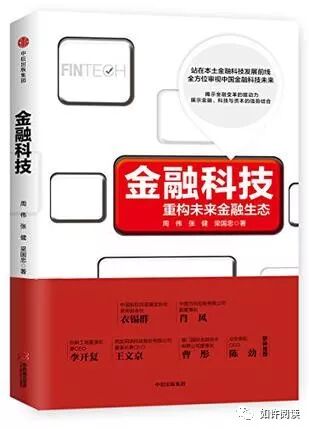
本书提供借阅,有兴趣请后台留言
旁听出版单位的年会,有编辑提议尝试使用区块链技术来卖书——文科童鞋的逆天脑洞吓死宝宝了——枉为IT从业人员,我一直没搞明白区块链是个啥。赶不上的浪潮,蹭不上的热点,涨不上的粉丝,木木徐三个字可以直接等同于拍拍慢。
几天后,老中青三代IT从业人员欢聚一堂继往开来迎新春之际,区块链再度成为热门话题。聊完基本概念、技术实现、业界八卦、投资指南之后,有人问到“那么区块链到底解决了一个什么基本问题?它的价值到底在哪里?”的时候,满屋子nerds也没有给出很好的答案。我很开心的发现:原来我不是一个人!
很多IT从业人员对区块链是持怀疑态度的,他们熟悉各种数字签名、哈希加密、共识算法,Proof of Work,Merkle Tree…可是去中心化一定比中心统一调度的系统效率更优吗?这种看上去挑战传统体制的技术到底有没有出路?
脱离业务谈技术总归是在空中悬着的,这本《金融科技》介绍了区块链在金融领域的价值。不同人对待同样一件事物的角度真的很不一样。整本书里没有太多技术细节,但是对区块链的来龙去脉、在金融领域的应用场景和发展预测都阐述地非常清楚。
投资人王川在讲区块链时候提到“Alan Kay的金句 A change in perspective is worth 80 IQ points(看问题的角度至少值80个IQ)。能够全面理解不同群体在同一时间对同一件事物的不同角度甚至截然相反的解读,非常重要。比如世界上还有几十亿的居民没有可靠方便的金融服务,拉美非洲很多国家常年恶性通货膨胀。一个保值加密方便的数字货币给了他们新的选择。塞浦路斯政府黑掉储户的存款,莫迪废掉印度的大额现钞,委内瑞拉的恶性通胀,每次这类事件的发生,都把大量新用户推向数字货币,尽管数字货币还有很多问题。但这些都是发达国家居民可能无法理解的。”
理解不同群体并不容易,预测未来更难。不过Alan Kay 还有一个更早的金句“The best way to predict the future is to invent it(最好的预测未来的方法就是去创造它)”。如果说区块链技术开启了价值互联网时代,那么在缺乏价值保护的信息互联网时代遭重创的出版业,说不定真的可以翻身,重获本应该得到的价值尊重。“用区块链技术来卖书”说不定就是大势所趋呢。
注:《金融科技》不是一本专门讲区块链的书,它“以偏重宏观的视角,讨论了金融科技发展演进的逻辑,金融业未来的形态变化,金融机构可能采取的应对”。对于像我这样的金融“麻瓜”来说,干货太多,嚼不动剌嗓子,去年十一拿到的书,到现在才读完。“币圈一日,人间一年”,按币圈的时间来看也算是百年经典了。
以下内容摘自《金融科技》
在人类文明的历史长河中,有两样东西的诞生,具有极为特殊的地位,其他任何创造都无法与之相提并论,它们就是文字与货币。文字的发明,使得人类能够在精神层面做到可靠的交流与传承;而货币的发明,则让人类在物质层面能够做到这一点。本质上,文字作为一种人际交流的手段,承载的是信息;而货币作为一种价值传输的载体,承载的是信用。
自两者诞生以来,人类信息传播和价值交换的手段也一直没有停止迭代和进化。传播信息的手段沿着文字、印刷术、电信号一路走来,而传递价值方式的演化基本上就是一部货币演化史。
互联网的出现,使人类的信息传播手段实现了一次飞跃,信息可以不经过第三方,点对点地实现在全球范围的高效流动。然而,互联网并没有对有价值的信息进行保护的内在机制,在网上复制传播一条信息,乃至篡改一条信息的成本几乎为零,我们无法点对点地传递带有所有权的信息。也就是说,我们的价值传递手段并没有实现同步的升级。在互联网上,我们面临着信息的传播能力远超过价值的转移能力的尴尬。信息传递和价值传输密不可分,我们有了互联网这么一个全球范围的高效可靠的信息传输系统,必然会要求一个与之匹配的高效可靠的价值传输系统。
在本质上,区块链是一种更宏大的叙事。从货币与记账货币的角度出发,可以更深刻的理解其本质。
石币之岛中提到雅浦岛上的奇特货币。一种又大又厚的石轮——“费币”构建了当地的货币体系。岛上居民进行的交易很多,但交易过程一般只是债务互相抵消的过程,账款通常留待以后的交易中进行转结。即便到了最后的清算时刻,费币也很少被搬动,当地人只是在费币上做标记,以显示所有权的易手,其所有者毋须持有它。雅浦岛的货币不是“费币”,而是背后的一套信用记录以及信用记录的清算构成的体系。
区块链的本质正是一种去中心化的记账系统,而比特币正是这个系统上承载的“以数字形式存在”的货币——比特币只是记账的表征,而区块链就是其背后的一套信用记录以及信用记录的清算构成的体系。它代表了一种可以点对点传输价值的信用系统,在这个系统中,没有权威中心和第三方机构,参与者在数学算法的保证下达成安全可靠的共识和价值传输。
金融业是一个建立在信任基础上的行业。为了维护信任,伴随着金融业的发展,出现了大量的中介机构,包括托管机构、第三方支付平台、公证人、银行、交易所等。这些机构是传统金融业必不可少的部分,同时也天然地带有成本较高、效率较低、容易出现单点故障的缺点。比如,在传统证券交易中,证券所有人发出交易指令后,指令需要依次经过证券经纪人、资产托管人、中央银行和中央登记机构这四大机构的协调,才能完成交易。整个流程效率低、成本高,且造就了强势中介。同时金融机构各个业务系统与后台工作,往往面临很长的流程和很多的环节。无论VISA,MASTER还是支付宝都是中心化结构运营,货币转移要通过第三方机构,这使得跨境交易、货币汇率、内部核算的时间成本过高,并给资本带来了风险。
区块链可以提升自动化水平,简化冗长的金融服务流程,降低运营成本。在区块链上交易被确认的过程,可以认为是同时实现了清算、结算和审计的过程。并且由于任何交易都需要全网达成共识,实际上形成了比审计更强的监督。
区块链不仅是一个工具,更是一种思想。它和互联网一样具备强叙事性,每个人都可以对其存有自己的理解。
如果说互联网代表了开放、平等、协作、共享的精神,区块链则在其中加入了信任这个核心元素。今天,互联网之所以给商业社会带来了深刻的影响,正是由于它打破了信息不对称。然而,互联网对信息不对称的打破还远不够彻底。由于没有可靠的信用保障及传输机制,我们仍然需要以来大量中介机构来保证价值的可靠存储和转移。这些中介机构的存在不仅降低了价值传输的效率,也增加了价值流通的成本。下一个阶段,以区块链为核心技术,将在现有信息互联网的基础上构建出全新的信用传输层,使在网上传递的信息有明确的价值归属,实现价值在全网的高效流动,信息互联网就升级成了价值互联网。
AI-generated translation.
This book is available to borrow — message us if you’re interested.
Sitting in on a publishing house annual meeting, I heard an editor propose using blockchain to sell books. Liberal arts kid brainwave levels are off the charts! As someone who actually works in tech, I’m a little ashamed I’ve never really understood what blockchain is. Waves I can’t catch, hype I can’t ride, fans I can’t grow — the three characters of “Mumu Xu” can pretty much be defined as “the slow-clap emoji.”
A few days later, when old-young-middle generations of tech workers gathered for a New Year’s get-together, blockchain became the hot topic again. After we’d chewed through the basic concepts, the technical implementation, industry gossip and investment tips, someone asked, “So what fundamental problem does blockchain actually solve? Where exactly is its value?” — and a room full of nerds couldn’t really give a good answer. I was delighted: I wasn’t alone after all!
A lot of tech people are sceptical of blockchain. They know all about digital signatures, hash encryption, consensus algorithms, Proof of Work, Merkle Trees… But is a decentralized system necessarily more efficient than a centrally coordinated one? Does this technology that seems to challenge conventional institutions actually have a future?
Talking about technology without anchoring it to business is like floating in the air. This book, Fintech, lays out the value blockchain brings in the financial domain. Different people really do look at the same thing through very different lenses. There aren’t many technical details in this book, but it explains the history of blockchain, its applications in finance and the likely shape of its future development very clearly.
In a talk on blockchain, the investor Wang Chuan quoted Alan Kay: “A change in perspective is worth 80 IQ points.” Being able to truly grasp how different groups, at the same time, read the same thing through different — even opposite — lenses is enormously important. For example: there are still billions of people in the world without reliable, convenient financial services; many countries in Latin America and Africa have chronic hyperinflation. A digital currency that holds value and is easy to encrypt is a real new option for them. The Cyprus government raiding depositors’ accounts, Modi pulling India’s large notes, Venezuela’s hyperinflation — every time something like this happens, huge numbers of new users get pushed toward digital currencies, despite all their unresolved problems. People in developed countries may simply find this hard to understand.
Understanding different groups is hard; predicting the future is harder. But Alan Kay has another, earlier line: “The best way to predict the future is to invent it.” If blockchain really does usher in the era of the Value Internet, then publishing — an industry battered in the Information Internet era for lack of value protection — might genuinely rise again, and reclaim the value-respect it always deserved. “Using blockchain to sell books” may even turn out to be where things are headed.
Note: Fintech is not a book specifically about blockchain. It takes “a more macro perspective on the logic of how fintech has evolved, on what the future shape of the financial industry might look like, and on how financial institutions may respond.” For a finance “Muggle” like me there’s so much dense material in it that I kept choking on it. I got the book in October of last year and only just finished it. “One day in crypto-land is one year in the rest of the world,” so on crypto-land’s clock this book is already a classic from a century ago.
The following passages are excerpted from Fintech.
In the long river of human civilization, two inventions occupy a particularly singular place — nothing else can compare with them. They are writing and money. The invention of writing allowed humans to reliably communicate and pass things on at the level of mind. The invention of money allowed humans to do the same thing at the level of matter. In essence, writing is a medium of human communication and carries information; money is a medium of value transfer and carries credit.
Since the birth of both, humans’ ways of transmitting information and exchanging value have never stopped iterating and evolving. The means of transmitting information have advanced from writing to printing to electrical signals; the means of transmitting value, broadly speaking, are the history of money itself.
The arrival of the Internet was a leap forward for the transmission of information: information could now flow point-to-point at high efficiency across the globe, without going through a third party. The Internet, however, has no built-in mechanism to protect valuable information. The cost of copying, transmitting, or even tampering with a piece of information online is essentially zero — we cannot transmit information with ownership attached, point to point. In other words, our means of transmitting value has not been upgraded in step. On the Internet, we face an awkward asymmetry: the capacity to transmit information far outstrips the capacity to transfer value. Information transmission and value transmission are inseparable; once we have an Internet — a global, efficient, reliable system for information transmission — we will inevitably demand a matched, equally efficient and reliable system for value transmission.
At its core, blockchain is a much bigger narrative. From the angle of “money and ledger-money,” its essence becomes clearer.
The Island of Stone Money describes the curious currency of the island of Yap. Large, thick stone wheels — fei coins — make up the local monetary system. Islanders trade frequently, but the trades are mostly mutual debt offset; the actual settlement is usually left to roll into later transactions. Even at the final reckoning, the fei coins are rarely moved. The locals just place a mark on the stones to show that ownership has changed hands. The owner doesn’t have to physically hold the coin. Yap’s currency isn’t the fei coin itself — it’s the system of credit records, and the clearing of those credit records, behind it.
That is exactly what blockchain is at heart: a decentralized accounting system. And Bitcoin is the “digitally instantiated” money living on top of that system — Bitcoin is only the visible token; the blockchain is the system of credit records and credit-record clearing behind it. It represents a credit system that can transmit value peer to peer, a system without an authority centre or third-party institution, where participants reach safe, reliable consensus and value transfer guaranteed by mathematics.
Finance is an industry built on trust. To safeguard trust, alongside the development of finance, a large number of intermediaries have emerged: custodians, third-party payment platforms, notaries, banks, exchanges, and so on. They are an indispensable part of traditional finance, but by their nature they bring high cost, low efficiency and risk of single points of failure. In a traditional securities trade, for example, after the securities owner issues a trade instruction, the instruction has to pass in sequence through the broker, the custodian, the central bank and the central registry — four institutions in coordination — before the trade can complete. The whole process is slow, expensive, and produces powerful intermediaries. Likewise, each business system and back office inside financial institutions involves long workflows and many handoffs. VISA, MasterCard, Alipay — they all run on centralized architectures; money transfer has to go through third-party institutions, which makes cross-border transactions, currency exchange and internal reconciliation costly in time and exposes capital to risk.
Blockchain can raise automation, simplify long financial-service workflows and lower operating costs. The process by which a transaction is confirmed on a blockchain can be thought of as simultaneously achieving clearing, settlement and audit. Because every transaction must reach network-wide consensus, it actually provides stronger oversight than an audit.
Blockchain is not just a tool — it is also a way of thinking. Like the Internet, it has strong narrative power; everyone can hold their own interpretation of it.
If the Internet stands for openness, equality, collaboration and sharing, blockchain adds a core element: trust. The Internet’s profound impact on the world of business comes from breaking information asymmetry. But its breaking of information asymmetry is far from complete. Because there is no reliable mechanism for guaranteeing and transmitting credit, we still rely on a large number of intermediaries to ensure value can be reliably stored and transferred. The existence of these intermediaries lowers the efficiency of value transmission and raises its cost. In the next stage, with blockchain as the core technology, a brand-new credit-transmission layer will be built on top of the existing Information Internet — so that information transmitted online has clear value ownership, and value flows efficiently across the network. The Information Internet will be upgraded into the Value Internet.