纳瓦尔宝典 *The Almanack of Naval Ravikant*
纳瓦尔是硅谷的一名投资人,投资了约两百家公司,名利双收。他出身贫穷的移民家庭,一度困顿迷茫,为了追求财富和幸福,付出了很多努力。
纳瓦尔认为积累财富和追求幸福都是“可以习得的技能”。他把自己学习到的一些经验和教训,总结思考,集结成文,出版了这本《纳瓦尔宝典》,火爆全网。
《纳瓦尔宝典》是根据纳瓦尔分享的文字记录、推文和谈话的集结,各个章节都是独立的。有点像《论语》,又有点像数学课本上的“定理”。随便翻到一处都可以畅读无阻,文字简洁但信息密集,值得进一步琢磨。
其中部分的想法和解读让我感觉耳目一新,摘录如下,篇幅有限,难免有断章取义之嫌。好消息是本书的中文版在微信阅读上可以免费读到,建议大家直接去看原书,应该会受到不一样的启发。
关于财富
追求财富,而不是金钱或地位。财富是指在你睡觉时仍能为你赚钱的资产。金钱是我们转换时间和财富的方式。地位是你在社会等级体系中所处的位置。
培养迭代思维。生活中所有的回报,无论是财富、人际关系,还是知识,都来自复利。
要想有所专长,就要追求真正的兴趣和热爱,而不是盲目追逐热点。
累积专长的过程,对你而言就像玩耍,对他人来说则很吃力。
要想获得财富,就必须充分利用杠杆效应。商业杠杆来自资本、劳动力和复制边际成本为零的产品(代码和媒体)。
当你终于变得富有时,你会意识到,这并不是你最初的追求。
纳瓦尔宝典
纳瓦尔认为,追求财富就要“把自己产品化”。 “自己”具有独特性,“产品化”是发挥杠杆效应;“自己”具有责任感,“产品化”需要专长。“自己”其实也具有专长。
“只有独辟蹊径,才能避开竞争。”从本质上看,竞争就是模仿,与他人竞争,是因为你跟别人在做一样的事情。但是,每个人都是独一无二的,不要模仿他人。
无论处于人生的哪个阶段,努力的目标都是不断提高自己的独立性,而不是升职加薪。拥有独立性,为自己独特的产出成果负责(而不是像打工一样为投入的时间负责),这才是最理想的状态。
最好的工作与委任或学位无关。最好的工作是终身学习者在自由市场中的创造性表达。致富最重要的技能是成为终身学习者,无论想学什么,你都得找到途径和方法。
以前的赚钱模式是读4年大学,拿到学位,在某个专业领域干上30年。现在不一样了,时代的发展日新月异,必须在9个月内掌握一门新专业,而这门专业在4年后就过时了。但在专业存在的这3年里,你可以变得非常富有。
不能同意更多!尤其是身处科技行业,技术迭代太快了。休了半年产假重返职场,我感觉恍如隔世。离开的时候大家都在做LLM,Copilot,短短几个月大家都在谈Agent,MCP。一方面追赶的压力让我有些气喘吁吁,另一方面暗自庆幸,身处新浪潮的早期阶段,未来有无限可能。

不要再把人分为富人和穷人、白领和蓝领了。现代人的二分法是“利用了杠杆的人”和“没有利用杠杆的人”。
纳瓦尔宝典
纳瓦尔把杠杆分为三种:第一种是劳动力杠杆,就是让别人给你打工;第二种是资本杠杆,用钱来扩大决策的影响力;第三种是复制边际成本为零的产品,包括书籍、媒体、电影、代码。所以,写这篇文章也是在利用第三种杠杆呀。
用头脑赚钱,而不是用时间赚钱。
把时间花在省钱上是不会致富的。省出时间来赚钱才是正确的思路。
在现代经济在,工作的努力程度并没有那么重要,而判断力则往往被低估了。
大胆地为自己设定一个很高的时薪,并坚持执行
纳瓦尔宝典
对利用杠杆的劳动者而言,判断力的重要性远超投入时间的长短和工作的努力程度。如果你有专长,有责任感,又懂得如何利用杠杆效应,社会为你提供的金钱回报就会与你的价值相匹配。这时,你就能节省下更多时间,进而变得超级高效。你不需要为开会而开会,不需要努力表现自己,也不需要通过汇报材料体现你的工作量—你只要关注工作本身就可以了。
只关注工作本身,效率就会变得极高。你可以合理调配自己的工作,在精力充沛的时候工作,不在状态不佳的时候做无用功。这样你就能够赢得属于自己的时间。
每周工作40小时是工业时代的产物。知识劳动者的时间安排与运动员如出一辙,有训练和冲刺的时间,也有休息和重新评估的时间。
事实上,留出空闲时间非常重要。如果每一天都被各种会议占满,都是忙忙碌碌的,你就无法进行思考。没有思考,你就不会有出色的商业创意,也不可能做出正确的判断。
悠闲的大脑才能产生伟大的创意。一个倍感压力、案牍劳形、四处奔波、焦头烂额的人,是没有办法思考的。所以,一定要为思考挤出时间。
人与人的区别不是“受过教育”和“没受过教育”,而是“喜欢阅读”和“不喜欢阅读”。
读书的唯一原因应该是喜欢,不需要其他任何理由。不要把读书当成一项任务,读书就是因为乐在其中。
不要比谁读书更快。书越好,你越要慢慢阅读、慢慢吸收。
纳瓦尔宝典
关于幸福
幸福是心境平和。想要拥有内心的平静,必须先拥有身体的平静。
幸福的人并不是时时刻刻都快乐的人。
幸福的人是可以轻松地以特定的方式诠释事件、保持内心平和的人。
纳瓦尔宝典
纳瓦尔认为幸福就是一种不需要主动作为的状态。幸福的含义主要是没有痛苦,没有欲望,不沉溺于对未来或过去的思考,真正拥抱当下,拥抱现状,拥抱现实的一切。当把“缺憾感”从生活中剔除时,幸福感就会油然而生。当感到生命中并不缺少什么时,大脑就会处于休眠状态,不再追忆昨天,也不再畅想明天,不会悔不当初,也不会谋求未来。
幸福不等同于积极的心态,也不等同于没有消极的想法。每个积极的想法其实都包含一个消极的想法。积极和消极是如影随形的相对概念。成功也不能带来幸福。幸福就是满足现状。而成功源于对现状的不满,是对现状的改造。两者只能选一个。
幸福指数的个人衡量标准是,一天中你有多少时间用于履行职责,而不是追随兴趣。
A personal metric: how much of the day is spent doing things out of abligation rather than out of interest?
纳瓦尔宝典
可能是中文翻译的问题。中文版的读起来感觉是“履行职责”会带来幸福。但是英文版表达(我个人也更加赞同)的是“追求兴趣”更能提升幸福感啊!我想去读一本书,我想去写一段文字,我想去跳一支舞,完成这些我想做的事情通常会让我感觉内心充盈,能量满满。而不得不做的琐碎事务更多的只是让我感觉自己被消耗。
关于自我救赎
迅速采取行动,并对结果保持耐心。
Impatient with action, patient with result
纳瓦尔宝典
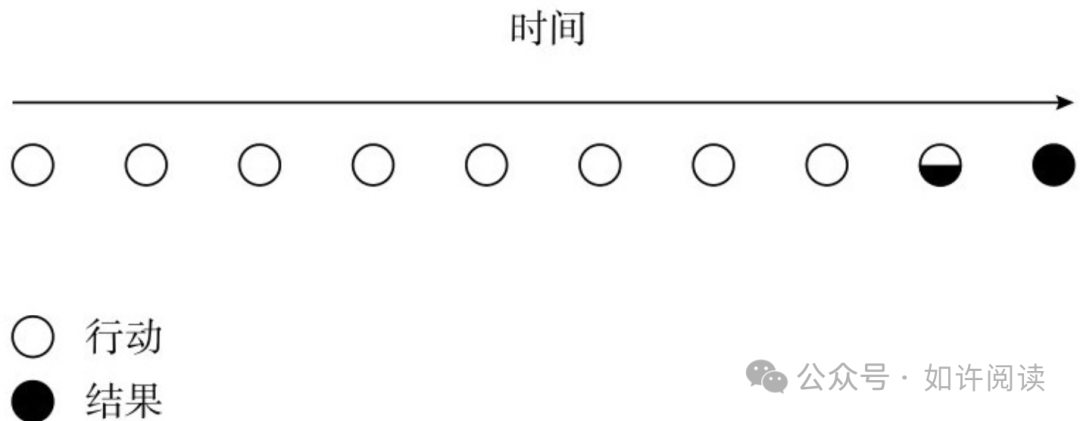
一旦决定去做,就要迅速采取行动,并全神贯注,全力以赴。同时,要对结果保持耐心,因为你唯一能把握的只有自己,他人和外界环境都纷繁复杂、充满变数。
市场接受一个产品需要经历很长时间。商业上的合作、职场上的配合都需要一定的磨合期。想要做出优秀的产品是需要时间的,因为你需要不断地、一遍又一遍地打磨它。一旦采取行动,就要速战速决,但等待结果要从容沉着。灵感易逝。当灵感乍现时,要马上行动起来。
最难的不是做自己想做的事,而是知道自己想要什么。
做最真实的自己。
勇气不是在枪林弹雨中冲锋陷阵,而是不在乎别人怎么想。
纳瓦尔宝典
纳瓦尔无比珍惜自由。以前他对自由的定义是“随心所欲即自由”—想做什么就做什么,想什么时候做就什么时候做。而现在,他追求的是内在的自由,“无忧无虑即自由”。例如,从愤怒中解脱的自由,从悲伤中解脱的自由,无须做出反应的自由,无须被迫做事的自由。
珍惜自己的时间。你唯一真正拥有的就是时间。时间比金钱更重要,比朋友更重要,比什么都重要。你的时间就是你的一切。不要浪费自己的时间。
不要花自己的时间去取悦别人。别人快不快乐是他们的问题,不是你的问题。你快乐了,别人也会快乐。你快乐了,别人会问你是如何快乐起来的,他们会从中学到点儿什么,但是你没有责任让别人快乐。
#纳瓦尔 #幸福 #财富 #读书
AI-generated translation.
Naval Ravikant is a Silicon Valley investor who has put money into around two hundred companies, earning both fame and fortune. He came from a poor immigrant family and went through a long stretch of struggle and confusion. In his pursuit of wealth and happiness, he put in enormous effort.
Naval believes that the building of wealth and the pursuit of happiness are both “skills you can learn.” He has gathered up his lessons and insights into a book, The Almanack of Naval Ravikant, which has gone viral online.
The Almanack is a compilation of Naval’s tweets, talks and transcribed remarks; each chapter is self-contained. It’s a little like the Analects of Confucius, and a little like a list of “theorems” in a maths textbook. You can open the book to any page and read on without losing the thread. The text is spare, but information-dense, and rewards further chewing.
Some of his ideas and framings struck me as fresh; I’ve copied a few below. With limited space, I am inevitably cherry-picking. The good news is that the Chinese edition of the book is freely available on WeChat Reading. I recommend going straight to the source — you’ll likely take away things different from what I noticed.
On wealth
Pursue wealth, not money or status. Wealth is the assets that earn while you sleep. Money is how we transfer time and wealth. Status is your position in the social hierarchy.
Cultivate iterative thinking. Every reward in life — wealth, relationships, knowledge — comes from compounding.
If you want to specialise in something, pursue real interest and passion, not the latest hot thing.
The process of building expertise feels like play to you, and like hard work to others.
To create wealth, you must use leverage. The forms of business leverage are capital, labour, and products with zero marginal cost of replication (code and media).
When you finally do become rich, you’ll realise it wasn’t what you were originally after.
The Almanack of Naval Ravikant
Naval believes that pursuing wealth means “productising yourself.” Your “self” is unique; “productising” is wielding leverage. Your “self” carries accountability; “productising” requires specific expertise. Your “self” actually carries that expertise too.
“The only way to avoid competition is to be uniquely yourself.” At its core, competition is imitation: you compete with others because you’re doing the same things they are. But every person is one of a kind. Don’t imitate.
Whatever stage of life you’re in, the effort should aim at increasing your independence, not at promotions and raises. The ideal state: being independent, accountable for your unique output (not, as in a job, for your hours).
The best jobs aren’t credentialled or appointed. The best jobs are creative expression of life-long learners in a free market. The most important skill for getting rich is being a lifelong learner — whatever you want to learn, you can find a way to learn it.
The old earning pattern: study for four years, get a degree, work thirty years in one specialty. Now everything has changed. You must master a new specialty in nine months — and that specialty will be obsolete in four years. But in the three years that specialty exists, you can get very rich.
I could not agree more — especially working in tech. The pace of technology change is staggering. I came back to work from six months of maternity leave and it felt like another era. When I left, everyone was talking LLMs and Copilot; in a few short months, everyone is talking Agents and MCP. On one hand, the pressure of catching up has me out of breath; on the other, I am quietly grateful to be at the early stage of a new wave, with infinite possibilities ahead.
Stop categorising people as rich/poor or white-collar/blue-collar. The modern dichotomy is “people who use leverage” and “people who don’t.”
The Almanack of Naval Ravikant
Naval breaks leverage into three kinds. The first is labour leverage — getting people to work for you. The second is capital leverage — using money to amplify the impact of your decisions. The third is products with zero marginal replication cost — books, media, films, code. So, by writing this post, I am also using the third type of leverage.
Earn with your mind, not with your time.
Spending your time saving money will not make you rich. Saving your time to make money — that’s the right approach.
In the modern economy, how hard you work doesn’t matter that much; judgment is often underrated.
Set yourself a high hourly rate and stick to it.
The Almanack of Naval Ravikant
For workers who use leverage, judgment matters far more than effort or hours worked. If you have specific expertise, you are accountable, and you know how to use leverage, society will reward you in proportion to your value. From there, you save more time and become super-efficient. You don’t need to attend meetings for the sake of attendance, you don’t need to perform, you don’t need to write status reports to prove your work — you can focus on the work itself.
When you only focus on the work itself, efficiency skyrockets. You can structure your work intelligently: work when you have energy, don’t grind through pointless work when you’re in a poor state. That way you get back your own time.
The forty-hour work week is a product of the industrial era. A knowledge worker’s schedule should look more like an athlete’s — periods of training and sprinting, and periods of rest and reassessment.
In fact, slack time is essential. If every day is packed with meetings and busyness, you can’t think. Without thought, no excellent business ideas, no good judgment.
Great ideas come from a relaxed mind. A person who is stressed, buried in paperwork, racing around, and on edge cannot think. So you must carve out time for thinking.
The difference between people isn’t “educated” or “uneducated”; it’s “loves to read” or “doesn’t.”
The only reason to read is because you enjoy it; no other reason is needed. Don’t treat reading as a task; read because you delight in it.
Don’t compete on reading speed. The better the book, the more slowly you should read and absorb it.
The Almanack of Naval Ravikant
On happiness
Happiness is peace of mind. To have peace of mind, you must first have peace in the body.
A happy person is not someone who is happy every moment.
A happy person is someone who can easily interpret events in a certain way and keep peace in their heart.
The Almanack of Naval Ravikant
Naval thinks happiness is a state that requires no active doing. Its essence is the absence of pain, the absence of desire, the absence of being lost in the future or the past, and the genuine embrace of the present, of what is, of reality as it is. When the sense of “lack” is removed from life, happiness arises by itself. When you feel nothing is missing, the mind goes quiet — no longer recalling yesterday, no longer dreaming of tomorrow, no regret, no scheming.
Happiness is not the same as positive thinking, and it is not the same as the absence of negative thoughts. Every positive thought contains within it a negative one. Positive and negative are inseparable relatives. Success doesn’t bring happiness either. Happiness is being content with what is. Success comes from being discontent with what is, from changing what is. You can only have one.
A personal metric: how much of the day is spent doing things out of obligation rather than out of interest?
The Almanack of Naval Ravikant
There may be a translation issue here. The Chinese edition reads as though “fulfilling obligations” is the path to happiness. The English version (which I also agree with more) actually argues the opposite: “pursuing interests” raises happiness. Reading a book, writing a passage, dancing a dance — doing the things I want to do — usually leaves me feeling full and energised. Doing the chores I have to do mostly just leaves me drained.
On self-redemption
Impatient with action, patient with results.
The Almanack of Naval Ravikant
Once you’ve decided to do something, move fast, focus completely, give everything. At the same time, be patient about the result, because the only thing you fully control is yourself; others and the world are complex and full of variables.
It takes time for a market to accept a product. Business partnerships and workplace collaborations all need a settling-in period. Excellent products take time, because you must polish them again and again. So: once you act, act quickly; once you wait, wait calmly. Inspiration is fleeting. When it flashes, move on it immediately.
The hardest part isn’t doing what you want; it’s knowing what you want.
Be your truest self.
Courage isn’t charging through enemy fire. Courage is not caring what others think.
The Almanack of Naval Ravikant
Naval treasures freedom. Earlier, his definition of freedom was “do whatever I want” — do what you like, when you like. Now what he pursues is inner freedom, “freedom from worry”: freedom from anger, freedom from sadness, freedom from the need to react, freedom from being compelled to do anything.
Treasure your time. The only thing you truly own is time. Time matters more than money, more than friends, more than anything. Your time is everything. Don’t waste it.
Don’t spend your time trying to please others. Whether they are happy is their problem, not yours. When you are happy, others will be happy. When you are happy, others will ask how you got there; they may learn something from it. But you have no duty to make others happy.
#Naval #Happiness #Wealth #Reading