关于珍·古道尔 On Jane Goodall

《珍·古道尔的传奇一生》
珍·古道尔被称为动物保护界的特蕾莎修女,她二十多岁时前往非洲的原始森林,为了观察黑猩猩,在那里度过了将近四十年的野外生涯。《珍·古道尔的传奇一生》今年在国内重新上映。纪录片里,年轻的珍在坦桑尼亚贡贝的丛林间轻快穿行,在一群黑猩猩附近的石头上坐下来,拿出本子记录着她的观察,表情平静又满足。
看纪录片的时候,我一直在想两个问题:到底是什么样的动机和力量让她在那样的一个年代完成了这样一件开创性的工作?她在本子上记了些什么呢?为了寻找答案,我找来了《点燃希望》和《大地的窗口》。
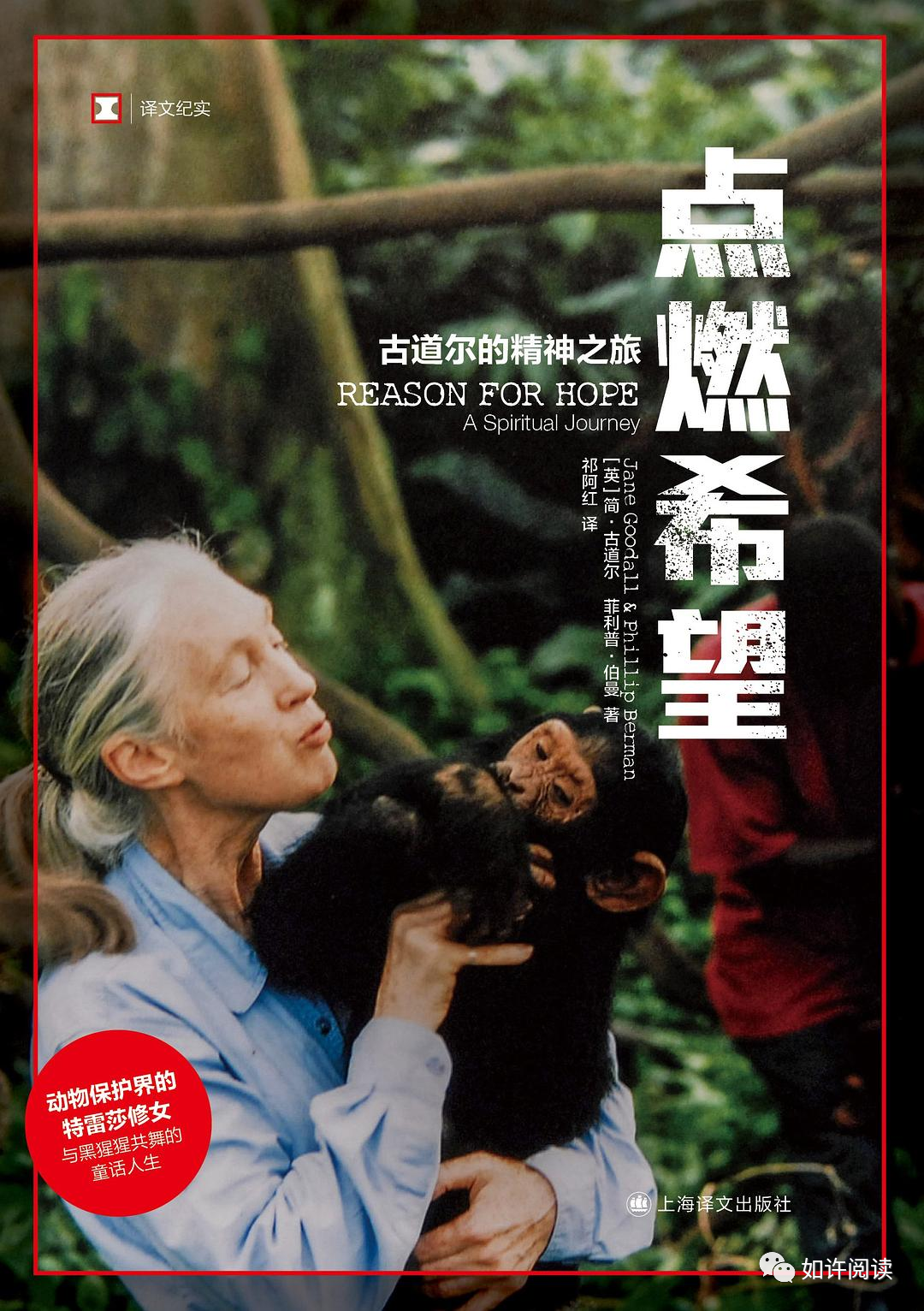
《点燃希望》
珍在纪录片中提到,她从小就热爱动物,喜欢大自然,自从读过《人猿泰山》之后就对非洲心向往之。珍常常提到自己是多么的幸运,能够有机会在非洲观察黑猩猩。她常常感觉“自己就生活在童年的梦想里”。然而,读她的《点燃希望》之后我发现,她这一路以来遭遇过那么多的坎坷。
第一次去贡贝的时候,观察员只有珍自己一个人。在最初的几个月里,她一无所获,非常担心经费用光了还是没有任何发现,就没有办法继续这项研究。随着局面的慢慢打开,她成立了黑猩猩观察站,招收了许多学生一起参与黑猩猩的追踪观察。然而挑战一直都在,有学生意外坠崖身亡,还有四名学生被绑架,比处理绑架事件更让人煎熬的是珍和她的丈夫遭遇的舆论谴责和友人间的信任危机。等这一切都渐渐平息,珍在向世界同行发表他们的研究成果的时候,又遇到科研界的政治问题。“也就是由于政治、宗教或者社会方面的原因,在发表还是不发表的问题上所受到的压力”。
所有的这些至暗时刻都让我觉得,珍能在这条路上走这么远,仅仅靠幸运是远远不够的。
《大地的窗口》

读《大地的窗口》就好像跟随珍,在非洲丛林里追随着黑猩猩们的脚步,零距离地深入他们日常生活。珍给她观察的每一只黑猩猩都取了名字,用名字而不是编号或者编码来指代她的观察对象。她用散文般的文字将贡贝黑猩猩族群的故事娓娓道来,读起来就好像是听老奶奶讲自家的故事,完全没有想象中读科技文献的晦涩和枯燥。或许你会像我一样惊讶的发现,个性,喜怒哀乐的情感,推理能力,爱他主义,亲情,族群,战争,合作等等都不是人类独有的。
“人类并不像我以为的那样与其他动物有很大的区别。”珍的这句话,让我想起最近非常火热的关于通用人工智能(AGI)威胁的讨论。OpenAI的首席科学家Ilya 在谈及AGI对人类的威胁的时候,曾经做过一个比如,AGI对待人类就像人类对待动物一样,“并不是说AGI会主动憎恨人类并想要伤害他们,并不是说我们讨厌动物。我认为人类热爱动物并且对它们有很多感情,但当需要在两个城市之间修高速公路时,我们不会争取动物的许可。”
有很多人,包括Ilya自己在内,都在努力确保AGI能有人文关怀。而我在想,我们是不是可以先从自己做起,对动物们多一些人文关怀?比如拒绝野生动物制品?比如拒看动物表演?比如下一次再见到动物们的时候多几分同理心,毕竟,它们比我想象中的能感受到更多。
AI-generated translation.
“Jane” (the documentary, Jane Goodall: The Legendary Life)
Jane Goodall has been called the Mother Teresa of animal protection. In her early twenties she set off into the primeval forests of Africa, and spent nearly forty years in the field observing chimpanzees. The documentary about her life was re-released in China this year. In it, the young Jane moves nimbly through the jungle in Gombe, Tanzania, sits down on a rock near a troop of chimpanzees, takes out her notebook, and records her observations with a face that is at once calm and content.
Watching the film, two questions kept circling in my head: what kind of motivation and force, in that era, drove her to pull off such pioneering work? And what was she actually writing down in those notebooks? To find some answers, I picked up Reason for Hope and Through a Window.
Reason for Hope
In the documentary, Jane mentions that she had loved animals and the natural world ever since she was small, and that after reading Tarzan of the Apes she’d longed for Africa. She often calls herself lucky to have had the chance to observe chimpanzees in Africa, and frequently says she feels like she’s “living inside the dream of her childhood.” But after reading Reason for Hope, I realized how many hard knocks the road had actually held.
On her first trip to Gombe, she was the only observer. For the first few months she found nothing, and she was deeply anxious that the funding would run out before there was any discovery to show — and the research would simply have to stop. As the situation slowly opened up, she set up a chimpanzee observation station and brought on students to help with tracking and recording. But the challenges never let up: a student fell from a cliff and died; four students were kidnapped. Harder to bear than the kidnapping itself were the public denunciations Jane and her husband faced, and the crisis of trust among friends that followed. Once all of that had quieted, when Jane was ready to publish their findings to the international community, she ran into political problems inside the scientific establishment — “pressures, for political, religious or social reasons, on the question of whether to publish or not.”
All those darkest moments made me feel that luck alone could not possibly explain how far Jane had gone down this road.
Through a Window
Reading Through a Window feels like following Jane into the African forest, walking in the chimpanzees’ footsteps and slipping into their daily lives at zero distance. Jane gave a name to every chimpanzee she observed — used names, not numbers or codes, to refer to her subjects. She tells the story of the Gombe chimpanzee community in an essayistic, unhurried voice; reading her feels less like reading scientific literature, which one might expect to be dry, and more like listening to a grandmother spin family tales. You may, like me, be surprised to discover that personality, the full range of emotion — joy, anger, grief, happiness — reasoning, altruism, kinship, community, war, cooperation… none of it is uniquely human.
“Humans are not as different from other animals as I had thought.” That line of Jane’s reminded me of the recent fervent debate about the threat of artificial general intelligence (AGI). OpenAI’s chief scientist Ilya, talking about AGI’s threat to humanity, once offered an analogy: AGI will treat us roughly the way we treat animals. “It’s not that AGI will actively hate humans and want to harm them. It’s not that we hate animals either. I think humans love animals and feel a lot of things for them, but when we need to build a highway between two cities, we don’t ask the animals’ permission.”
A lot of people, including Ilya himself, are working to ensure that AGI carries some humane concern. What I keep wondering is: shouldn’t we start with ourselves, and extend a little more humane concern to the animals? Say no to wildlife products. Stop going to animal shows. The next time we meet another creature, bring a little more empathy. They feel far more, after all, than I used to imagine.