德奥湖山记 Germany, Austria, Lakes and Mountains
今年的九十月份一直在路上。结束了在奥地利的出差之后,速游德国和捷克,回到深圳短暂停留,立即奔赴湖北,又转战山东。
一路下来想写点东西,提笔已是三个月之后了,刚好,可以记录在时间过去之后留下来的感受。
旅行的意义
每一次出差,与外国同事们的相处过程都会触碰到我的盲区,让我感受到“文化冲击”。
首先是语言的障碍。我的英语应付日常的工作还凑合,跟老外闲聊起来就跟不上趟儿了。他们许多的日常表达——甚至都不算是俚语——我都听不懂。一位同事很兴奋地给我讲他的中国丈母娘做的家宴,说到一道菜,名字我不懂,他一边比划一边解释,“绿色的,长长的”,到最后我也没搞清楚是芹菜、莴笋还是豆角?
其次是文化的隔阂。我们从小读过的文章、看过的电影、听过的音乐、追过的明星,都太不一样了。有一次大家聚在一起闲聊,讲自己的“champion music”,他们说的音乐我都不知道是什么,我想到的中文歌曲——且不说翻译的对不对——估计他们也都没听过。
最后是历史知识的匮乏。我的世界历史知识简直是空白,许多国家在我的脑海中仅仅是一个名字。这次去维也纳之前,我都不知道奥地利是一个德语国家。听到一位波兰裔的同事聊起自己从小在科威特长大,我就很纳闷儿,为什么一个欧洲人会在中东长大?在捷克停留的一天,我们在布拉格闲逛。我很惊讶地看到卡夫卡的故居。卡夫卡的国籍不是“奥匈帝国”么?怎么会出现在布拉格?感谢豆包,非常详尽的回答我的这些疑问,并且给我科普了“20世纪科威特的石油经济发展”和“波兰的对外劳务输出政策”,以及“奥匈帝国和当代捷克的历史地理变迁”。
在我更年轻一些的时候,跟外国同事们相处时的隔阂感,曾让我苦恼,我也考虑要不要为了更好地融入,努努力补补课。现在反倒坦然了,接受了这种差异的存在,承认自己的盲区,也不着急着要做些什么来填补了。
回国之后,重读茨威格的《昨日的世界》,其中涉及奥地利和德国的部分读起来莫名多了几分亲切。那些奇奇怪怪的地名,比如萨尔茨堡,之前直接跳过的,现在也变得具体了起来。甚至,读到茨威格回忆自己年轻时难以融入英国社会,我竟有些惺惺相惜。
出去走走,重读旧书有了不一样的感受。在陌生环境里激发出的好奇心,把我带回成一个满心问号的孩子。天地广阔,还有许多的未知等待着我去探索。比起美食美景,这是更令人着迷的旅行的意义。
美好的她们
这次与我同行的还有三位姑娘,我们在差不多两周的时间里朝夕相处。四个成长环境迥异,性格爱好天差地别的人,在短短的十几天里,磨合出了默契,创作出我们自己的段子,提到暗语便哈哈大笑,让我仿佛穿越回学生时代的女生宿舍——人到中年还有这种体验真是奢侈啊。
写到这里的时候,德奥之行已经过去三个多月了,回忆起来,我还是忍不住感叹:与姑娘们结伴出行真是美好啊!她们会做好详细的攻略,还专门开会讨论,以确保每个人的喜好和愿望都尽量被照顾到。出行前的准备会互相提醒,甚者互相代劳。从感冒药、手机防盗绳到各种辣条,你想得到的想不到的东西她们都带齐了。出门在外的每一天,都有好好吃饭好好如厕,她们把自己照顾得非常好。
同行的一位姑娘是汽车迷,不仅认路开车是一把好手,还非常乐于分享汽车知识,在她眼中,每辆汽车都有自己的人物气质。在宝马汽车博物馆里,我一眼就迷上了小可爱,我的梦中情车 Isetta 250❤️可惜早已停产。后来我们在柏林街头竟然看到一辆正在行驶的神似Isetta的小车,一查发现是Microlino,同样的呆萌可爱,期待有朝一日能够进入中国。

我的梦中情车 Isetta 250
跑题了,说回姑娘们。
我在工作上也接触到很多女性,政治不正确的讲,我真的更喜欢跟女同事们合作!她们通常更有责任感,凡事有始有终有回应,沟通起来更顺畅。我遇到的女老板们,并没有国产剧中常见的女上司脸谱化的强势或者歇斯底里,反倒是头脑清晰,逻辑严谨,表达有温度,非常擅长促成跨团队合作,最难得的是有“活人感”:她们会坦诚自己的无能为力和局限性,会分享自己的内心感受,而这一点我很少在男老板身上看到。
妹妹出生之后,我对自己的“偏见”更加笃定:女性的美好是从小到大的。
女儿真是太美好了。妹妹从小开始,夜里从不大声哭闹,饿了也只是哼哼唧唧在床上来回翻滚,奶瓶塞到嘴巴里,立马就安静了。早上起床自己翻身坐起来,睁开眼睛就笑眯眯的看着大家。
十一期间我独自带妹妹从湖北坐火车到山东,又从山东飞回广东。我做好了心理建设,预备她路上哭闹尖叫。谁想到妹妹一路如此天使:不仅全程不哭不闹不尖叫,还靠微笑加小肉手打招呼,和前后左右的旅客友好互动。吃饭的时候,自己坐在中间的座位上安安静静的等妈妈吃完。下车下飞机的时候,周围的旅客都跟妹妹打招呼,表扬这个小朋友表现也太棒了吧!
当然,妹妹并非所有情况下都是这样的乖巧,遇到她特别喜爱的人,尤其是漂亮的姐姐们,也会尖叫,手舞足蹈地求关注。
妹妹出生之后的这一年,我的整体心态就是“有女万事足”。生活中总多少有些不如意,但每天早上醒来,看到妹妹熟睡的小脸儿,脑海中飘过六个字:“那都不叫事儿”。
分区的味蕾
我发现先生回到家乡才真正回归了他自己。看他写对家乡变化的眷恋,字里行间满满的怀旧情绪和缱绻深情,还是最初吸引我的“回乡见闻”的调调。
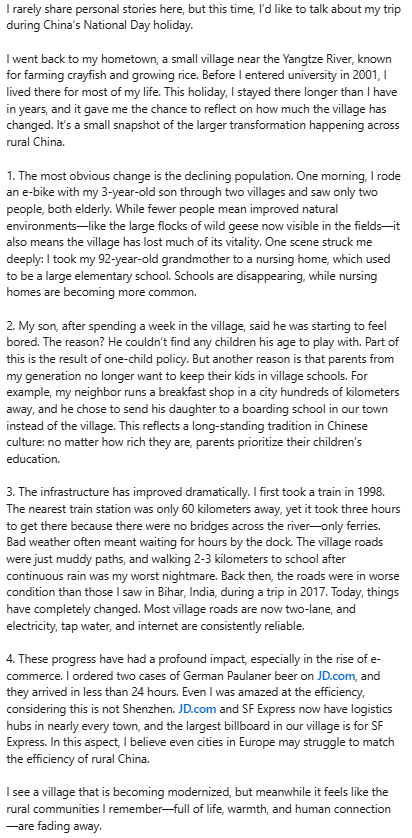
胡老师的国庆回乡见闻
我自己也只有回到济南,回到父母身边,才感觉到真正的放松,衣来伸手,饭来张口,彻底躺平,彻底摆烂。
回家之后老爸问我想吃啥,我在外对家乡的海鲜大鱼大肉都没啥念想,唯一惦记的就是商河老豆腐。
商河老豆腐口感一点都不老,是在DuangDuang嫩的豆花上浇上香料熬制的酱油汁,调过的麻酱汁,还有辣椒油和香菜。不要说在南方或者在北京,就算是在济南,都很难吃到口味正宗的老豆腐。这玩意儿也没法打包不能空运,出了商河真就吃不到了!
我怀老大的时候第一次经历强烈的乡愁,具体表现就是想吃老豆腐!在大众点评上翻来翻去,还真在一家小店的评论区发现有人提到“商河老豆腐”,当即驱车前往。到达目的地之后,发现是一家开在马路边卖羊汤的小店,老板说老豆腐只有早上有,今天已经卖完了。第二天一早我又赶去,终于吃到了,味道差强人意,但也算解了个馋。
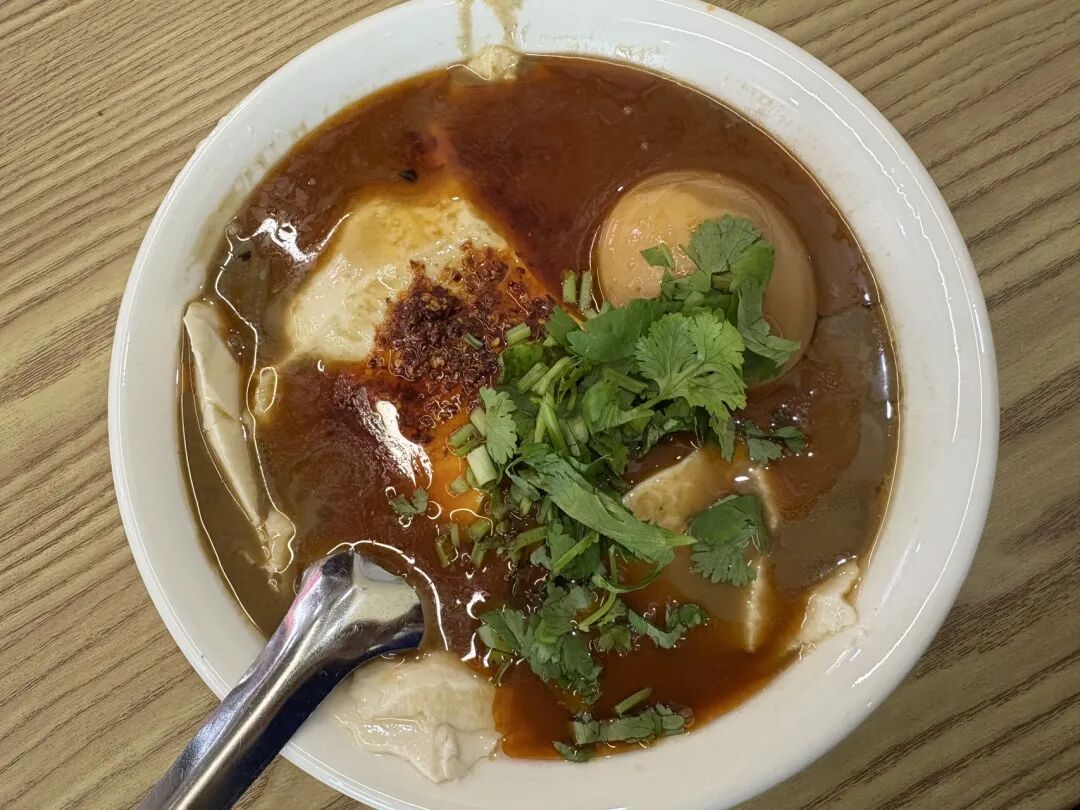
商河老豆腐
疫情期间,各个地方都会发布“寻找密切接触者同轨迹人员的通告”。有一天我在大家庭群里看到一个老家的确诊病例,一天三顿都去吃了商河老豆腐,羡慕死了!把我给馋的,口水直接流到手机屏幕上。
为什么商河老豆腐一直也没能走出商河走向全国呢?我不懂制作工艺上的限制,单纯从口味来说,商河老豆腐在外估计不会有太大的市场空间。南方普遍缺乏咸豆花的群众基础,就算有,他们青睐的多是云贵川的香辣咸鲜,而且大部分人接受不了麻酱味儿。北方更普遍的豆腐脑儿受众喜爱的,是用鸡蛋木耳黄花菜勾芡儿的卤子。就连我父母,近几年也更青睐高唐老豆腐,因为“口感更清亮”。
我们全家只有我自己对商河老豆腐有执念,也不难理解。我是在商河出生长大,一直到十几岁离家去读寄宿学校;我父母是成年之后才到商河参加工作;而弟弟只在商河读到了幼儿园。所以只有我肠道内的菌群是被老豆腐塑造过的,所以才会如此念念不忘。
最近,我发现自己的味蕾好像悄悄分了区:在北方偏爱老豆腐,到了南方迷上了猪杂粿条。来到深圳之后,我第一次体会到猪杂的美妙。用美栅的话说“广东人是处理猪杂的神”可以把猪杂处理的如此“干净Q弹软糯”。
二胎职场妈妈的生活似好像陀螺,要是赶上娃生个病,简直就是生无可恋,面如死灰。这时候来上一碗猪杂粿条,当场即可满血复活,可以继续跟生活再战五百回合。
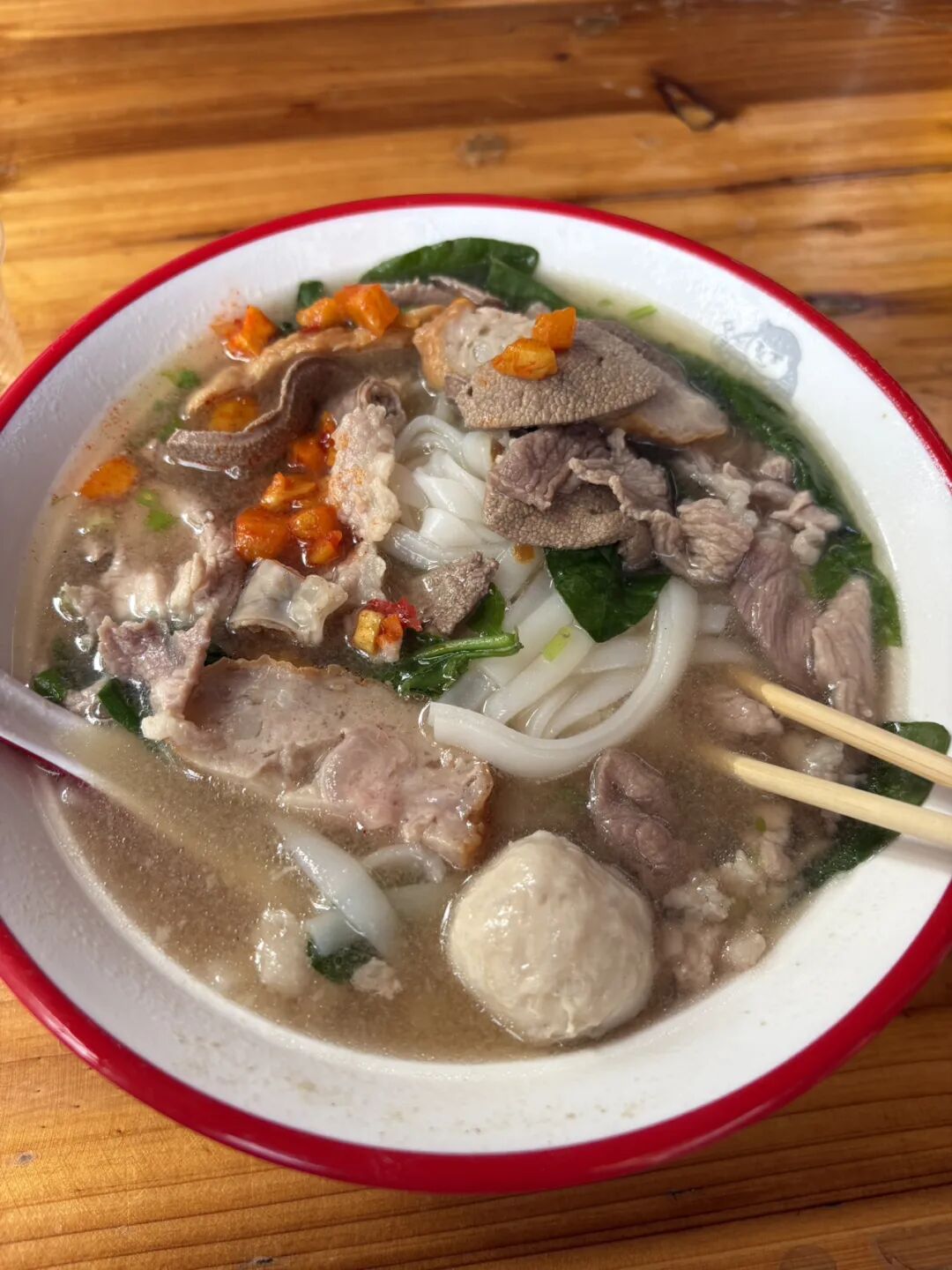
猪杂粿条
AI-generated translation.
This September and October I was on the road non-stop. After a business trip in Austria, a quick tour through Germany and the Czech Republic, then a brief stop in Shenzhen, and immediately off to Hubei, and then on to Shandong.
I wanted to write about it as it was happening — and now, picking up the pen, it’s already three months later. Just as well: I can record the impressions that survived after time had done its sifting.
What travel is for
Every business trip, getting along with foreign colleagues touches my blind spots and gives me a small dose of “culture shock.”
First, the language barrier. My English is just enough to muddle through daily work, but in casual chat with foreigners I can’t keep up. So many everyday expressions — not even slang — go right past me. One colleague was excitedly telling me about a home-cooked meal his Chinese mother-in-law had made. One dish he mentioned by a name I didn’t catch; he gestured and explained “it’s green, it’s long” — but in the end I still couldn’t tell whether it was celery, asparagus lettuce, or string beans.
Second, the cultural gap. The essays we read as kids, the films we watched, the music we listened to, the celebrities we followed — they’re all so different. Once at a hang-out, everyone went around sharing their “champion music.” I didn’t recognise any of theirs; and the Chinese songs I could think of (never mind whether the translation worked) they certainly wouldn’t know.
Third, my embarrassingly thin knowledge of world history. World history is a near-blank for me; many countries are only a name in my head. Before this trip to Vienna, I didn’t know Austria was a German-speaking country. When a Polish-heritage colleague mentioned growing up in Kuwait, I was puzzled — why would a European grow up in the Middle East? On our one day in the Czech Republic we wandered around Prague and I was startled to see Kafka’s house. Wasn’t Kafka from the “Austro-Hungarian Empire”? How is his house in Prague? Thank goodness for Doubao, which patiently answered all my questions and gave me brief intros on “the 20th-century oil economy of Kuwait,” “Poland’s foreign labour-export policy,” and “the historical-geographical evolution of the Austro-Hungarian Empire and modern Czech Republic.”
When I was younger this sense of distance from foreign colleagues used to bother me, and I thought about studying hard to fit in better. Now I’m at peace. I accept that the difference is there, I admit my blind spots, and I’m in no hurry to fill them.
After getting home, I re-read Zweig’s The World of Yesterday. The Austrian and German parts felt unexpectedly familiar. Strange place names like Salzburg that I used to skim over had now become concrete. I even read Zweig’s account of his difficulty fitting into English society as a young man, and felt a small flicker of fellow-feeling.
Going out and coming back to old books gives them a different flavour. The curiosity that fires up in unfamiliar territory turns me back into a child full of question marks. The world is wide, and there is still so much waiting to be explored. More than the food and the scenery, that is the more compelling meaning of travel.
The wonderful women
Three other girls travelled with me on this trip, and for nearly two weeks we were together morning to night. Four people from utterly different backgrounds, with utterly different temperaments and tastes, somehow within those twelve-odd days settled into rhythm together, made up our own inside jokes, and would burst into laughter at the mention of a code-word — for a moment I was back in a girls’ boarding-school dorm. To have an experience like that in mid-life is luxury.
As I write this, the Germany–Austria trip is already three months in the past, and remembering it I still can’t help marvelling: travelling with girls is wonderful. They make detailed itineraries; they hold actual planning meetings, so every person’s preferences and wishes can be accommodated. Before departure they remind one another what to bring, sometimes even take care of one another’s packing. From cold medicine to anti-theft phone tethers to all manner of spicy snacks — every imaginable thing, and many you wouldn’t think of, they have brought. Out and about, every day, they eat properly and use the bathroom properly. They look after themselves beautifully.
One of the girls was a car nut, not only an expert at finding our way and driving but always glad to share her car knowledge — every vehicle, to her, had its own personality. At the BMW museum I fell instantly in love with my dream car, the Isetta 250 ❤ — sadly long out of production. Later, on a Berlin street, we actually saw a tiny car uncannily like the Isetta in traffic. Look it up — turns out it’s a Microlino, just as adorably round and silly. I hope it eventually makes it to China.
My dream car, the Isetta 250
Off-topic — back to the girls.
I work with many women too, and — at risk of being politically incorrect — I really do prefer working with female colleagues. They tend to have more sense of ownership; they see things through to the end, and respond. Communication is smoother. The female bosses I’ve worked under are nothing like the stereotyped fierce-or-hysterical female bosses of Chinese TV; they are clear-headed, rigorous, warm in expression, very good at fostering cross-team collaboration. The most precious thing is the sense of being a real person: they’re honest about their limits, they share their inner feelings — and that I rarely see in male bosses.
After my daughter was born, I am even surer of my “bias”: women are wonderful from the very beginning.
A daughter really is a wonderful thing. From early on, my little girl never cried hard at night; when hungry she just whimpered and rolled around on the bed, and the moment a bottle reached her mouth she went quiet. In the morning she sits up by herself, opens her eyes, and smiles at everyone in the room.
Over the National Day holiday I took her alone, by train from Hubei to Shandong, then by plane back to Guangdong. I had braced myself for tantrums and screaming. Instead she was an angel: no crying, no fussing, no screaming the entire way; she greeted other passengers with smiles and little waves and chubby-hand hellos. At meal times she sat quietly in the middle seat waiting for Mum to finish. Getting off the train, getting off the plane, the surrounding passengers would talk to her and praise this little one for being so impossibly well-behaved.
She isn’t always so meek, of course. If she meets someone she really likes — especially pretty older sisters — she also shrieks, waves her arms, and demands attention.
This first year after my daughter was born, my general state of mind has been: “with a daughter, all is well.” There are always things in life that don’t go the way you’d want, but every morning when I wake up and see her little sleeping face, six words drift through my mind: that is nothing at all.
The map of taste
I have come to see that my husband only truly returns to himself when he returns to his hometown. Reading his pieces about how he misses the changes there, the deep tenderness and nostalgia between the lines — it’s exactly the “notes from a homecoming” voice that first drew me to him.
Mr Hu’s National Day homecoming notes
Likewise, only when I’m back in Ji’nan, with my parents, do I really relax. Hands stretch out, clothes appear; mouth opens, food appears. Total lie-down, total surrender.
When I got home, Dad asked what I wanted to eat. The home seafood and meat feasts didn’t pull at me; the one thing I missed was Shanghe laodoufu — old-style tofu pudding.
Shanghe laodoufu isn’t tough at all — it’s “duang-duang” tender tofu, ladled with a sauce of seasoned soy, seasoned sesame paste, chilli oil, and coriander. Forget the south or Beijing — even in Ji’nan it’s hard to find one made right. The stuff can’t be packed up and can’t be flown. Once you leave Shanghe, you really can’t eat it.
When I was pregnant with my elder son I had my first real bout of homesickness, expressed simply as: I want laodoufu! I scrolled and scrolled on Dianping and finally found a single hole-in-the-wall comment that mentioned “Shanghe laodoufu” — I drove there immediately. When I got there it turned out to be a little roadside lamb-soup shop. The owner said laodoufu is only available in the morning, and they were sold out for the day. I went back the next morning early and finally had some. Not great, but it scratched the itch.
Shanghe laodoufu
During the pandemic, when every city was publishing “notices to people sharing a positive case’s movement,” one day I saw on a family chat group that a confirmed case back home had eaten Shanghe laodoufu three meals in a row. Envy. I drooled onto my phone screen.
Why has Shanghe laodoufu never broken out of Shanghe and gone national? I don’t know the production constraints; purely on flavour grounds, I suspect Shanghe laodoufu doesn’t have much of a market outside. Southerners largely don’t have the savoury-tofu-pudding habit; and where they do, they tend to like Yunnan-Guizhou-Sichuan spicy-savoury notes, and many can’t take the sesame-paste taste. Northern doufu-nao fans prefer a thick egg-and-wood-ear-and-lily-flower starch-thickened sauce. Even my parents in recent years have shifted to Gaotang laodoufu, on the grounds that “the texture is cleaner.”
I’m the only one in the family who is fixated on Shanghe laodoufu — which isn’t hard to explain. I was born and raised in Shanghe until I left for boarding school in my teens. My parents only moved to Shanghe in adulthood for work; my brother only finished kindergarten there. So I’m the only one whose gut flora was shaped by laodoufu, and that’s why it stays with me.
Lately I notice that my taste buds seem to have quietly zoned themselves: in the north I crave laodoufu; in the south I’m hooked on pork-offal guotiao. It was after moving to Shenzhen that I tasted the wonder of pork offal for the first time. As Meishan puts it: “Cantonese are the gods of offal” — they can prepare pig offal to be “clean, springy and soft.”
A working mother with two kids spins like a top, and if one of the kids gets sick, you’re done for — drained, ashen-faced. At that moment a bowl of pork-offal guotiao will revive you on the spot, back to full HP, ready for another five hundred rounds with life.
Pork-offal guotiao